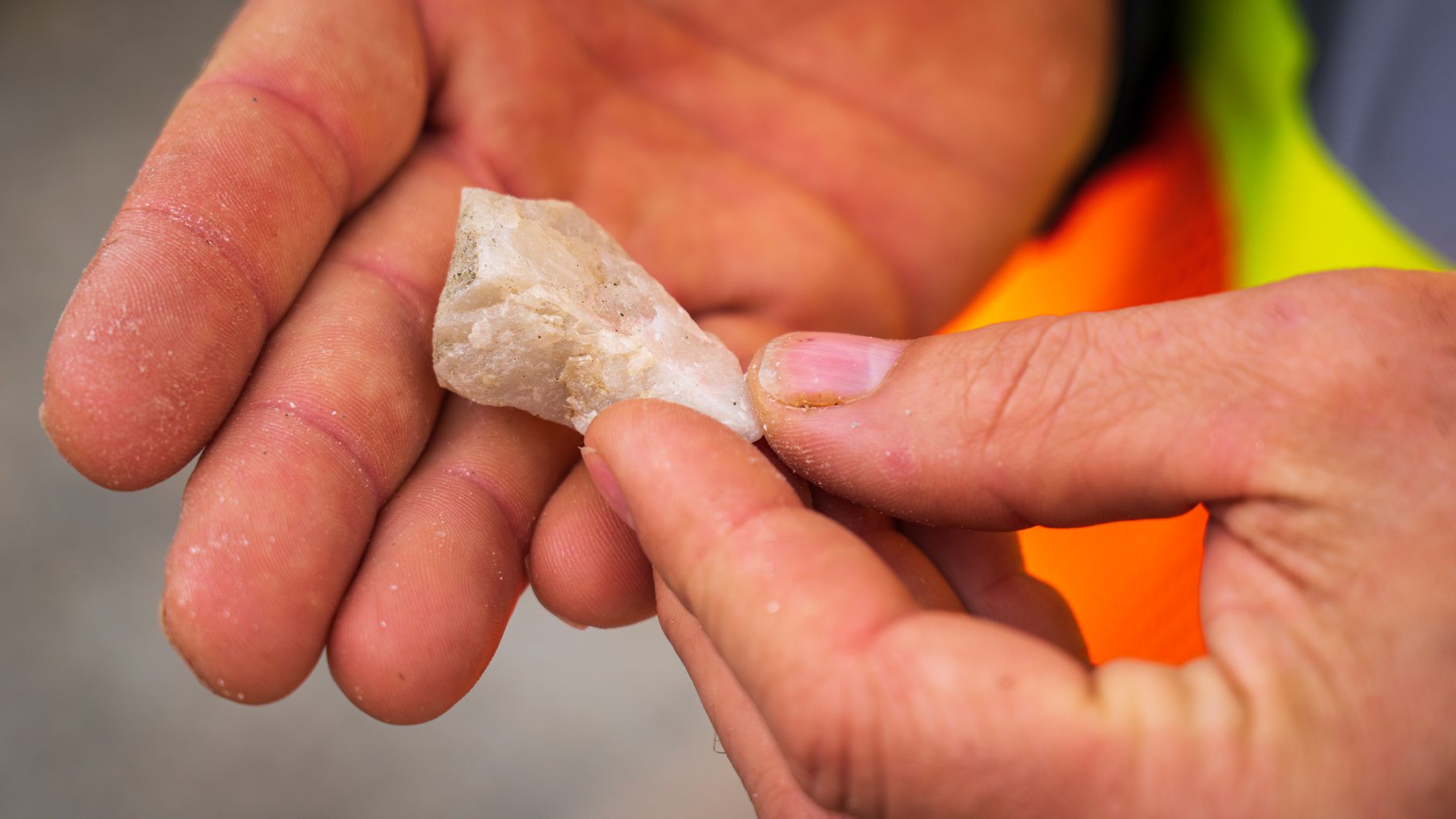
A pale stone sits in your palm. You found it near a dry wash in Arizona. It could be calcite, gypsum, quartz, or something else entirely. Color alone cannot tell you. Hardness can. The Mohs hardness scale is the fastest first test for a new specimen. In 1812, German mineralogist Friedrich Mohs arranged ten common minerals by their ability to scratch one another. That simple list became the standard field method for mineral identification. The scale orders minerals from talc at 1 to diamond at 10. Mindat.org lists hardness values for nearly every mineral species, which makes the scale even more useful. It has helped rockhounds for over two centuries. Once you learn the scale, a pocketknife and a copper penny become powerful diagnostic tools.
Many beginners think hardness is how easily a mineral breaks. That is wrong. Hardness measures resistance to being scratched, not toughness or brittleness. Diamond scores a 10 and will scratch anything, but a hard whack from a rock hammer can still shatter it. On the other hand, a piece of nephrite jade may feel softer than diamond but is famously tough. You therefore use hardness for surface testing. You do not use it for impact. This distinction saves specimens and prevents misleading results. A good field guide will remind you to test gently and record what actually happens.
This article explains how the scale works, how to run a scratch test, and what numbers mean for common rocks, gems, and lapidary projects. You will also learn which everyday objects substitute for the ten index minerals. A fingernail, a copper penny, a steel knife, and a piece of glass cover much of the scale for free. Hardness is not a complete identification, but it quickly rules out many possibilities. It also tells you whether a stone can be polished in a tumbler or cut with a standard saw. Always verify land ownership and collecting rules before removing material. With that in mind, let us start at talc and work up to diamond.
| Reference Material | Mohs Hardness | What It Tests |
|---|---|---|
| Talc | 1 | Softest standard mineral |
| Fingernail | 2.5 | Scratches gypsum, not calcite |
| Copper penny | 3.5 | Scratches calcite, not fluorite |
| Steel knife blade | 5.5 | Scratches apatite, not orthoclase |
| Window glass | 5.5 | Same bracket as a knife blade |
| Steel file | 6.5 | Scratches orthoclase, not quartz |
| Quartz | 7 | Common benchmark mineral |
| Topaz | 8 | Harder than quartz |
| Corundum | 9 | Scratches topaz |
| Diamond | 10 | Hardest standard mineral |
What Exactly Is the Mohs Hardness Scale?
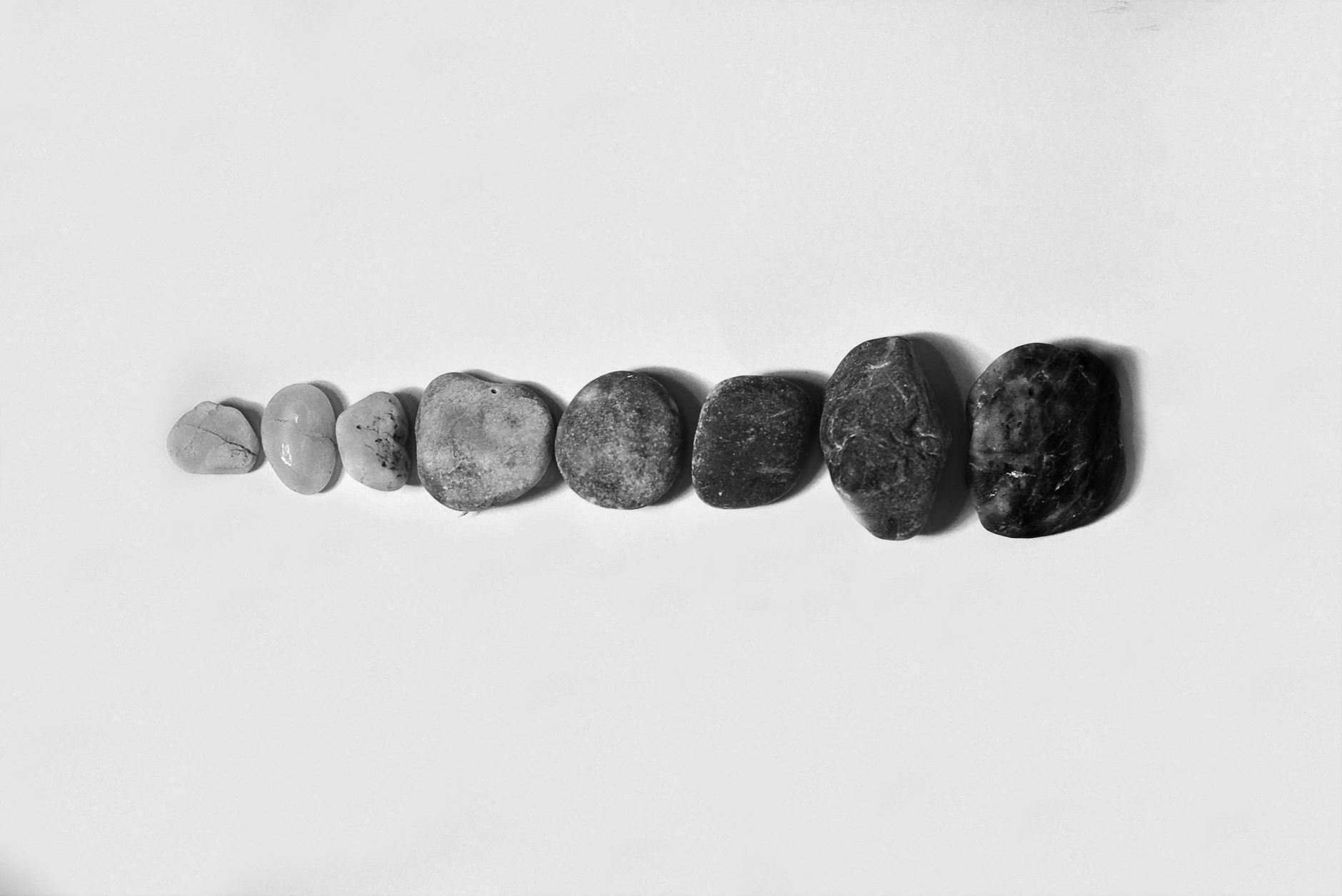
The Mohs scale is ordinal, not linear. Talc is 1, diamond is 10. The distance between 9 and 10 is much larger than the distance between 1 and 2. A mineral with hardness 6 is not simply one unit softer than quartz at 7. It is only softer in scratch order. A fingernail sits at about 2.5. A copper penny sits near 3.5. Window glass is about 5.5. These values help you bracket an unknown mineral quickly.
Here is the full list from soft to hard. Talc, gypsum, calcite, fluorite, apatite, orthoclase feldspar, quartz, topaz, corundum, diamond. You do not need to carry all ten. Common objects cover the same range. The scale is accepted worldwide. Mindat.org uses Mohs hardness as a standard property in its mineral database.
A mineral’s hardness can vary slightly with impurities or crystal orientation. Kyanite has hardness 4.5 along the long axis and 6.5 across it. That kind of anisotropy is one reason a single test is not final. Always test fresh surfaces and record the result in context.
- Talc, 1
- Gypsum, 2
- Calcite, 3
- Fluorite, 4
- Apatite, 5
- Orthoclase feldspar, 6
- Quartz, 7
- Topaz, 8
- Corundum, 9
- Diamond, 10
How Do You Perform a Scratch Test in the Field?
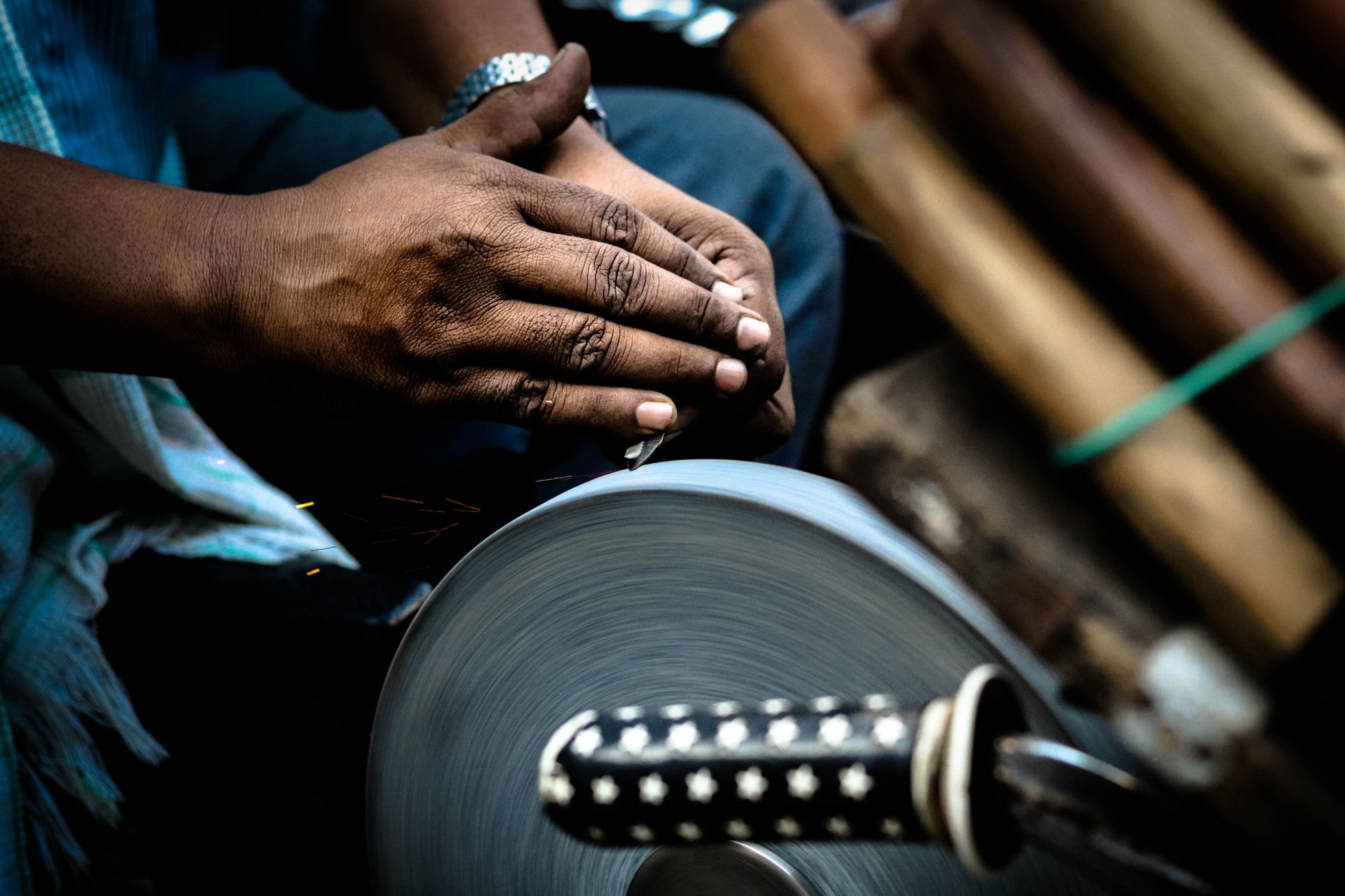
A scratch test is simple but needs care. Choose a sharp corner of the unknown mineral if possible. Press it against a flat, clean surface of a known object or reference mineral. Press firmly enough to leave a mark, but not hard enough to break either piece. Then wipe the mark with your finger. A true scratch is a groove you can feel with a fingernail. A white chalky line may just be powder from the softer material. You need to distinguish a real scratch from a streak of crushed mineral. The how to identify rocks and minerals in the field guide covers this in more detail.
Work from low to high. Start by trying to scratch the unknown with your fingernail. If your fingernail leaves a groove, the unknown is about 2.5 or softer. If not, try a copper penny. If the penny scratches it, hardness is around 3.5 or below. Next use a steel pocketknife or nail, about 5.5. If the mineral scratches the knife instead, it is harder than 5.5. Finally, see if the mineral scratches window glass or a streak plate, around 5.5 to 7. Many rockhounds keep a small field hardness pick set with reference points for 2 through 9. A 10x hand lens helps you see the scratch. Check the best magnifying loupes for rockhounds before you buy one.
Test twice in different directions. Some minerals such as kyanite have directional hardness. Weathering can also create a soft crust on the surface. If possible, break a small edge or test a fresh surface. That gives more reliable results. Clean the sample before testing because dust and grit can confuse the result. A dry sandy specimen may scratch a knife and make you think it is harder than it really is. Keep a small brush in your kit. Always brush away loose grains first.
What Are the Hardness Values of Common Minerals and Everyday Objects?
The ten index minerals provide anchor points. Talc is 1, gypsum is 2, calcite is 3, fluorite is 4, apatite is 5, orthoclase feldspar is 6, quartz is 7, topaz is 8, corundum is 9, and diamond is 10. You do not need to carry all ten. Common objects cover the same range. The table below shows where everyday tools fit between the index minerals.
A fingernail sits at about 2.5. A copper penny sits near 3.5. A steel knife blade or typical nail is around 5.5. Window glass is also about 5.5. A steel file is around 6.5. A streak plate is about 7. These values let you bracket hardness quickly without a full reference set. If a mineral scratches glass but not quartz, its hardness is around 6 to 6.5. If it scratches quartz, you are looking at something harder than 7.
Why Is Hardness So Important for Rockhounds and Lapidary Work?
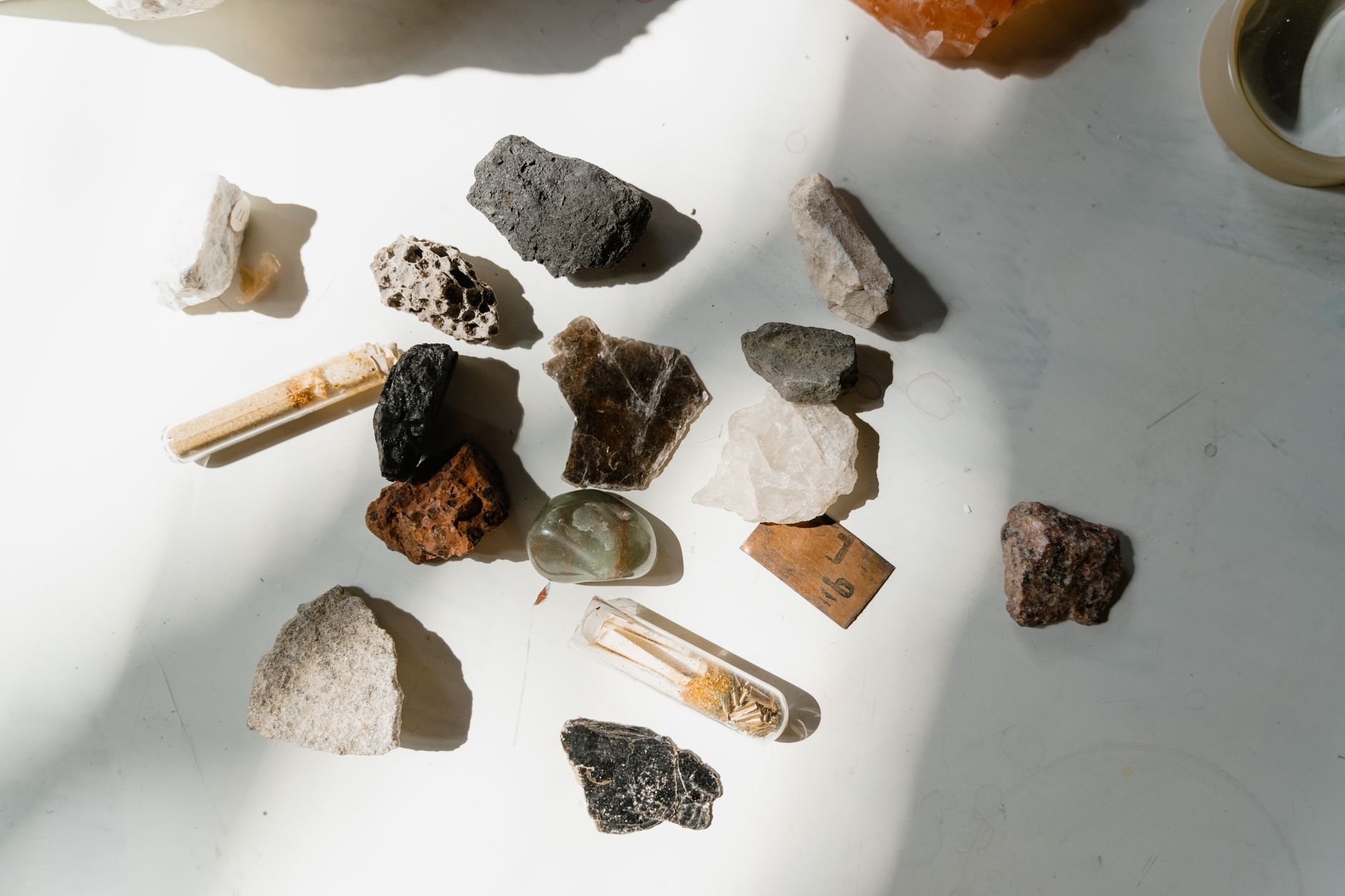
Hardness separates lookalike minerals quickly. Calcite and quartz can both be white or clear, but calcite is 3 and quartz is 7. A drop of acid helps too, but hardness alone rules out one or the other in seconds. In the field, that saves time and pack weight. The scale also helps you decide collecting spots. Some public lands are known for particular minerals. The best beginner rockhounding sites often list what to expect by hardness class.
Lapidary work depends on hardness. The best lapidary equipment 2026 can cut and polish agate, jasper, and quartz because those materials have hardness around 7. Softer stones such as calcite, fluorite, and obsidian require gentler grits and more careful polishing. If you tumble mixed stones, hardness differences cause soft stones to wear down faster. A piece of feldspar at 6 will lose mass next to quartz at 7 in the same tumbler barrel. Check best rocks to tumble for compatible hardness groups.
Hardness also affects durability in jewelry. A gem set in a ring takes daily wear. Stones softer than 7 can scratch from household dust, which contains quartz. That is why diamond, sapphire, and ruby are preferred for engagement rings. GIA education uses Mohs hardness as one of its core gem properties. A gemstone identification guide will explain how hardness interacts with cleavage and toughness. Hardness alone does not make a gem durable, but it is a key starting point.
What Are the Most Common Mohs Hardness Mistakes?
A major mistake is confusing a scratch with a mark. Many minerals leave a powder streak on a harder surface. That powder can look like a scratch. Rub the area with your finger. A true scratch will remain as a groove. Another mistake is pressing too hard. You can crush a fragile crystal and believe it was scratched. Use steady but modest pressure. You are testing surface resistance, not compressive strength.
Weathering and coatings cause false readings. A rusty rind on a quartz nodule can be softer than the fresh quartz inside. Scratch the fresh surface. Directional hardness also fools people. Kyanite is the classic example. It has hardness 4.5 along one axis and 6.5 across another. If you test only one direction, you may misidentify it. Some stones are also composites. A rock containing both hard and soft minerals will give inconsistent results. That is why you should test individual grains where possible. See the how to identify fool’s gold guide for a mineral that often misleads beginners by color and habit. Pyrite has hardness 6 to 6.5, which separates it from soft gold at 2.5 to 3.
One more mistake is ignoring context. An unknown mineral in a granite likely has a hardness near quartz or feldspar. But if you found it in a limestone quarry, calcite becomes more likely. Hardness fits best with other observations. Record where you found it and what rocks surrounded it. A good field data sheet helps. Never remove material from claimed or restricted land without permission. Check land ownership and local collecting rules first.
How Do You Use Hardness With Other Identification Clues?
Hardness narrows a search. Suppose you find a green mineral and it scratches glass easily. That puts it at 6 or harder. You still need color, crystal shape, streak, and luster. Is it green feldspar? Is it green quartz? Is it olivine? Olivine is about 6.5 to 7. Green quartz is 7. A green feldspar such as amazonite is 6 to 6.5. Hardness alone will not separate them. But it rules out green fluorite, which is only 4. That is valuable.
Streak is the color of the powdered mineral. It can be surprising. Hematite has a red-brown streak even when the specimen is silver-gray. Luster tells you whether light reflects like metal, glass, or wax. Cleavage shows how a mineral breaks along flat planes. Hardness combines with all of these. A good mineral collecting field guide and a gemstone identification guide both explain how to build a full profile. The GIA offers deeper gem-testing methods for faceted stones. GIA gem identification reports include hardness testing alongside optical and specific gravity data.
For rock identification, hardness also works with grain size and texture. Granite has interlocking crystals, and its quartz and feldspar both scratch glass. Sandstone, in contrast, may feel gritty but may shed grains. If you can scratch it with a penny, it is not typical quartz sandstone. That tells you the cement or mineral makeup differs. Use simple field tests in sequence. Start with hardness, then streak, then acid if safe, then look at crystal habit. Each result reduces the possibilities. You will start to recognize common minerals by touch alone.
Frequently Asked Questions
What is the softest mineral on the Mohs scale?
Talc is the softest at 1. It can be scratched by a fingernail and often feels greasy or soapy.
Is the Mohs hardness scale linear?
No. The scale is ordinal. The absolute hardness jump between corundum at 9 and diamond at 10 is much larger than the jump between gypsum at 2 and calcite at 3.
Can I use a steel pocketknife for a Mohs test?
Yes. A steel knife blade or nail is about 5.5 on the Mohs scale. It will scratch apatite and anything softer, but it will not scratch orthoclase feldspar or quartz.
Does a scratch leave a streak or powder line?
A scratch is a groove that remains after you rub the surface. A powder line may wipe away and does not count as a scratch.
What hardness is common window glass?
Window glass has a Mohs hardness around 5.5. Minerals that scratch glass are generally 6 or harder, like orthoclase feldspar and quartz.
Why is hardness important for tumbling rocks?
Hardness affects how fast a stone grinds and polishes. Stones of similar hardness should be tumbled together so softer stones do not wear away too quickly.
What Should You Remember?
- The Mohs hardness scale runs from talc at 1 to diamond at 10.
- Scratch tests use simple tools like a fingernail, copper penny, knife blade, and glass to bracket hardness.
- Quartz at 7 is a common benchmark. It scratches glass and steel.
- A scratch is a groove, not a powder line. Wipe the surface to confirm.
- Hardness works best with streak, luster, cleavage, and location.
- Use similar hardness groups when tumbling or polishing stones.
- Always verify land ownership and collecting rules before removing material.
This article is for general information only. Rockhounding and collecting carry land-access, safety, and legal obligations , always verify claim status, land ownership, and collecting rules before removing material, and get landowner or land-agency permission where required. Field collecting involves physical hazards; use proper safety gear and never enter mines or unstable terrain.