Rockhounding begins with your eyes, but many field identifications stall before you ever swing a hammer. A sharp loupe changes that. It lets you see crystal faces, cleavage planes, striations, and tiny inclusions that separate fluorite from calcite or genuine quartz from polished glass. After testing a pile of loupes on quartz, agate, garnet, and a piece of Franklin marble, I put this guide together for rockhounds who want optical quality without hauling a microscope. For a broader look at field equipment, check our best rockhounding gear guide before you spend money. If you are still learning what to look for at magnification, the gemstone identification guide explains the features that matter.
Magnification is not just about power. A 10x triplet lens uses three pieces of glass to correct color fringing and edge blur. Cheap plastic singlets magnify, but they distort mineral edges at the rim. The Gemological Institute of America recommends a 10x triplet for gemstone inspection, and that standard carries into the field. With a sharp 10x loupe, you can distinguish a polished agate from a bit of slag, or see the difference between a quartz crystal face and a broken shard. Our guide to how to identify rocks minerals field covers the basics. I inspected quartz crystal terminations, garnet inclusions, and a piece of Franklin marble under each loupe. The right lens made the difference immediately.
Before choosing the five loupes below, I checked lens type, working distance, field of view, build material, and whether a built-in light actually helps. I also considered budget. You do not need an expensive loupe to start, but the cheapest plastic lens will frustrate you after one outing. Mineral hardness matters too. Quartz sits at Mohs hardness 7, while calcite sits at 3. A good loupe helps you see scratch-test results and cleavage surfaces. For locality-specific minerals, Mindat.org hosts the most complete mineral database. Always verify land ownership and collecting rules before removing material. The Bureau of Land Management has public-land regulations that vary by district.
For 2026, field loupes fall into two main groups: classic 10x triplets and inexpensive lighted magnifiers. The top pick for most rockhounds is the BelOMO 10x Triplet Loupe. It gives a wide, flat field that works everywhere from best beginner rockhounding sites to hard-rock mine dumps. If you need more magnification, the JARLINK 30X 60X is a cheap way to inspect micromounts on a table. Skip the 40x singlets you see at flea markets. They are too hard to hold steady, and the lens quality is usually poor. A steady 10x view beats a shaky 40x blur every time. This guide lays out the tradeoffs so you can buy once and actually use the tool.
How Do the Top Options Compare?
| Loupe | Magnification | Lens Type | Price |
|---|---|---|---|
| BelOMO 10x Triplet Loupe 21mm | 10x | Triplet glass, 21mm | Check price |
| Bausch & Lomb Hastings Triplet 10x | 10x | Hastings triplet glass | Check price |
| Carson Optical 10x Lighted Loupe | 10x | Acrylic with LED | Check price |
| JARLINK 30X 60X Illuminated Jewelers Loupe | 30x/60x | Glass with LED/UV | Check price |
| SE 10x 18mm Triplet Loupe | 10x | Triplet glass, 18mm | Check price |
Prices are current as of 2026. A 10x triplet is the standard for field mineral identification. Always verify land ownership and collecting rules before removing material. Magnification above 10x is hard to use handheld.
1. BelOMO 10x Triplet Loupe 21mm , Best overall field loupe
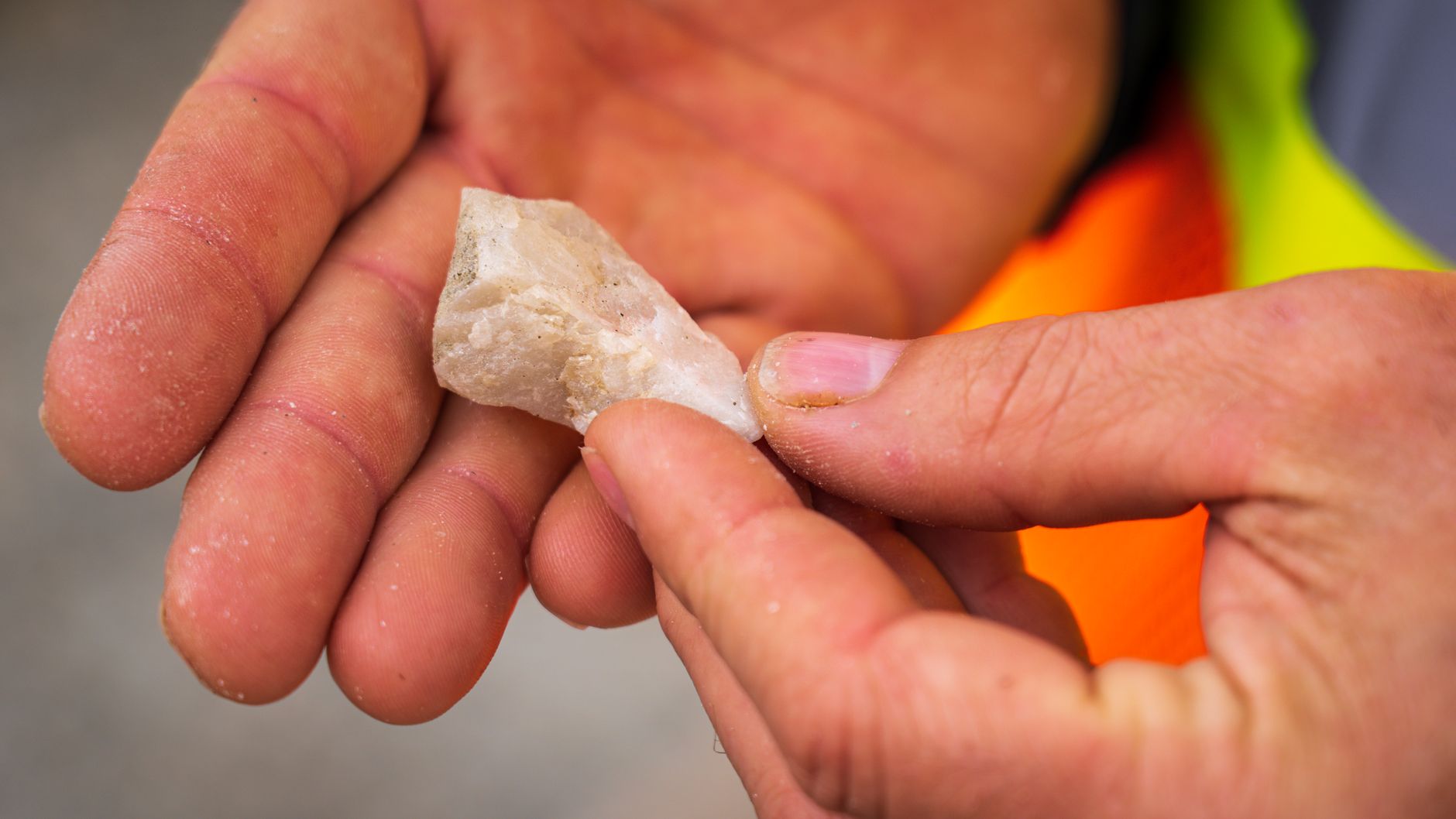
The BelOMO 10x Triplet Loupe is the reference standard for rockhounds who want edge-to-edge sharpness. It uses three cemented glass lenses to correct color, so a quartz crystal face looks white and crisp instead of fringed with blue. The 21mm lens is wider than most pocket loops, which helps when you scan a rough specimen for small garnets or pyrite cubes. I have used this loupe on Herkimer quartz with tiny inclusions, and the details jumped out. It pairs well with a mineral collecting field guide when you want to confirm what you are seeing.
The metal body swings into a protective housing. It feels heavier than plastic, but that weight steadies your hand in the field. It does not have a built-in light, so you will rely on sunlight or a headlamp for indoor work. The working distance is comfortable, about 10 to 15 mm from the specimen. That means you can inspect a rough rock without pressing your nose into the dirt. The lens is recessed enough to avoid most scratches, but I still keep it in a pocket pouch.
For the price, the BelOMO is not cheap. You can buy three plastic loops for the same money. But those plastic loops will not show true mineral colors or sharp grain boundaries. The BelOMO does. It is the kind of tool you keep for a decade. If you are serious about rockhounding, this is the one to get. Check the BelOMO 10x Triplet Loupe on Amazon
Key strengths:
- ✅ Edge-to-edge sharpness with triplet glass
- ✅ Wide 21mm lens scans larger specimens faster
- ✅ Durable metal body lasts for years
- ✅ Minimal color fringing, true mineral colors
- ✅ Comfortable working distance for field use
- ❌ Priced higher than plastic loupes
- ❌ No built-in LED light
- ❌ Heavier than compact folding loops
Who it’s for: Choose this if you want the sharpest 10x field view, a wide scanning area, and a tool that will last for years.
2. Bausch & Lomb Hastings Triplet 10x Loupe , Best compact color correction
Bausch & Lomb’s Hastings triplet is a classic pocket magnifier with excellent color correction. The three-lens design reduces color fringing, so red garnet, ruby, and zircon look distinct rather than muddy. The lens is small, usually around 20mm, but it is extremely sharp in the center. I keep one in my field vest next to a scratch test kit. When I want to check agate banding or a possible fossil, this loop shows the detail I need. If you are using a guide like how to identify agates, the sharp image helps a lot.
When closed, the brass body protects the lens from pocket grit. It is simple and reliable. There is no light, no battery, and no plastic hinge to crack. The smaller lens means you will move it around more on large specimens, but that is fine for point inspection. I have dropped mine twice, and the housing took the scratches. The lens stayed clear.
For the price, this Hastings triplet is one of the best values in optics. It does not have the wide 21mm field of a BelOMO, and it will not illuminate a dark mine drift. But it weighs almost nothing and takes up no space. If you want a true triplet without spending over $50, this is the pick. Check the Bausch & Lomb Hastings Triplet Loupe on Amazon
Key strengths:
- ✅ Excellent color correction in a small package
- ✅ Durable brass body with screw-closed lens
- ✅ Light and pocketable for long hikes
- ✅ Affordable triplet optics
- ✅ Simple no-battery design
- ❌ Smaller field of view than 21mm BelOMO
- ❌ No built-in illumination
- ❌ Lens can fog if kept too close to skin
Who it’s for: Choose this if you want true triplet color correction in a compact pocket loupe.
3. Carson Optical 10x Lighted Loupe , Best budget lighted option
Carson’s lighted loupe is one of the cheapest ways to get magnification and illumination in one tool. It uses an acrylic lens and a small LED, so the image is not as sharp as a triplet. The light helps in mine dumps, under overhangs, and inside rock shops with dim corners. I have used it at beginner rockhounding sites where I just need a quick look at a possible agate. At 10x, it confirms banding or rules it out.
The acrylic lens has noticeable edge blur and minor distortion, especially at the rim. For most quick checks, that is fine. You will not confuse a quartz point with glass, but fine inclusions may hide. The built-in LED runs on button cells, and battery life is average. Keep a spare set in your kit. The body is plastic and lightweight, which is good for a pocket but less durable in a backpack full of rocks.
I would not use this as a primary mineral identification tool if you often inspect gem-quality material. But for beginners, casual collectors, and low-light situations, it works. It is also cheap enough to throw in a glovebox or field bag. If you lose it, you will not cry. Check the Carson Optical 10x Lighted Loupe on Amazon
Key strengths:
- ✅ Built-in LED helps in dark areas
- ✅ Very affordable entry point
- ✅ Lightweight, easy to carry
- ✅ Good for quick field checks
- ✅ Simple one-button operation
- ❌ Acrylic lens is not as sharp as triplet glass
- ❌ Edge distortion at full field
- ❌ Button batteries need frequent replacement
Who it’s for: Choose this if you want an inexpensive lighted loupe for beginner outings and low-light checks.
4. JARLINK 30X 60X Illuminated Jewelers Loupe , Best high-magnification inspection
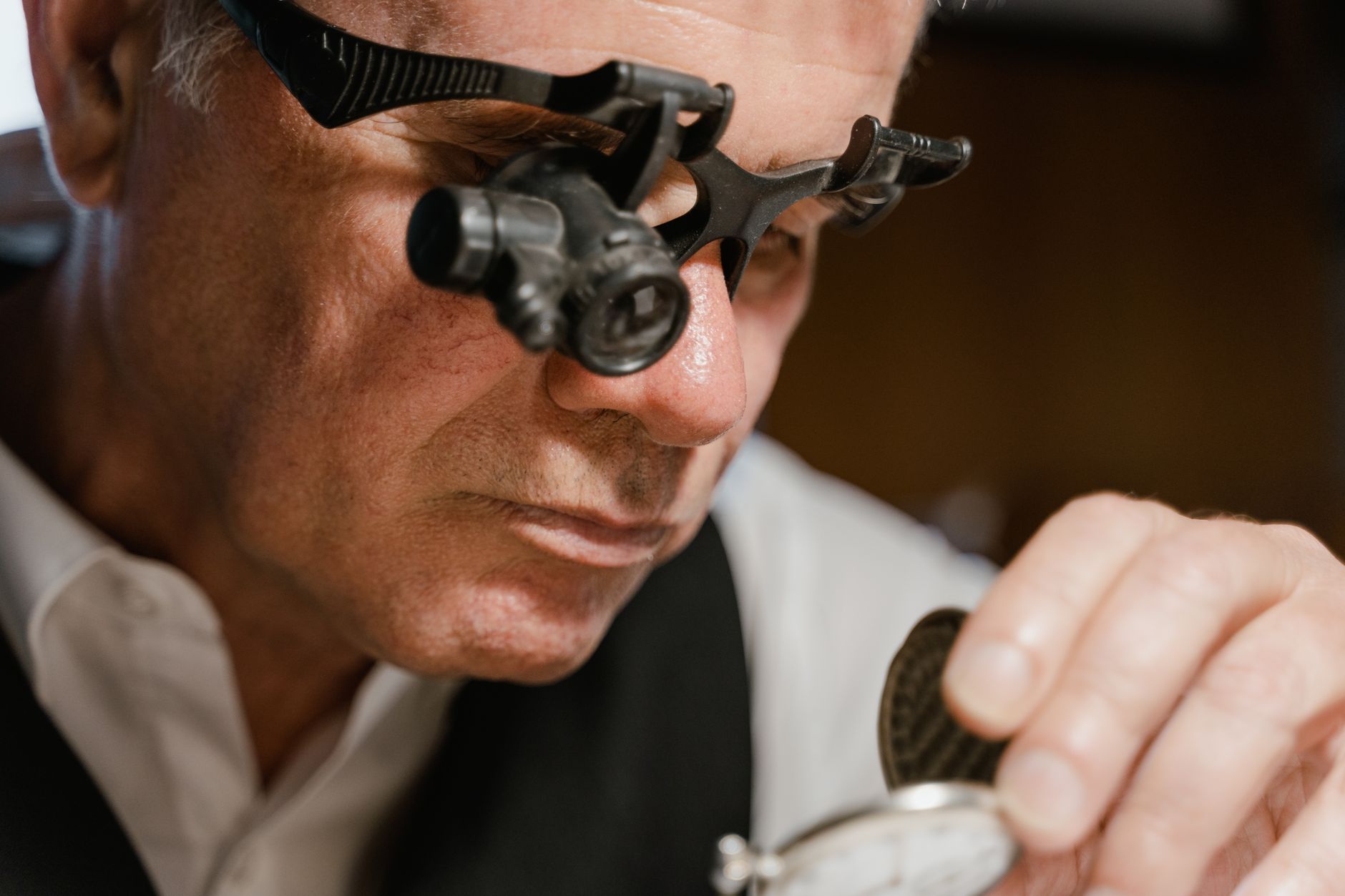
The JARLINK 30X 60X delivers more power than a standard field loupe. It has two magnification levels, a built-in LED, and a UV light. That makes it useful for examining tiny inclusions, micromounts, or fluorescent minerals. At 30x, you can see the cleavage angles on a 3 mm calcite rhombohedron. At 60x, you need a very steady hand or a mounted specimen. I use it mostly indoors on a table, not on a trail.
High magnification narrows the depth of field. Only a small slice of the specimen will be in focus, so you will adjust constantly. The LED helps but does not fix hand shake. For a steady view, brace your hand on a rock or use a small tripod. The UV light is a bonus for checking fluorescence, but it is not powerful enough for serious fluorescent mineral collecting. Still, it can reveal calcite or willemite glow under a dark room.
The body is plastic and feels less durable than metal triplet loupes. It is also easy to lose because it is small and light. But for the price, it opens up mineral details that 10x cannot show. This is not a replacement for a 10x field loupe. It is an additional tool for tabletop work. If you want to inspect micromounts on a budget, this is the one.
Key strengths:
- ✅ Two magnification levels: 30x and 60x
- ✅ Built-in LED and UV light
- ✅ Very low cost for high power
- ✅ Useful for micromounts and inclusions
- ✅ Compact for a magnifier of this power
- ❌ Narrow depth of field at high power
- ❌ Hand shake is hard to control above 30x
- ❌ Plastic body feels less durable
Who it’s for: Choose this if you want a cheap high-power magnifier for tabletop mineral inspection and micromounts.
5. SE 10x 18mm Triplet Loupe , Best budget metal triplet
The SE 10x 18mm Triplet Loupe is the best option if you want genuine triplet glass without paying BelOMO prices. Its 18mm lens is smaller, but it still delivers a flat, sharp image across most of the field. The metal body feels solid, and it comes with a lanyard. I have used it to check conchoidal fracture in chert and small pyrite cubes in quartz. The image is not as wide as a 21mm BelOMO, but it is far better than any acrylic loop.
It has no light and no folding case, but the lens is recessed enough to stay protected. The smaller lens means more movement across large specimens. For a sub-$15 triplet, that is acceptable. The lanyard helps prevent drops on rough ground. I have loaned this loupe to new collectors and they are always surprised at how sharp it is for the money.
If you are building your first field kit, this is a smart buy. It will not beat the BelOMO on field size, and it has no illumination. But it gives real triplet color correction at a price that is easy to justify. You can always upgrade later and keep this as a backup. The SE is proof that good optics do not have to be expensive.
Key strengths:
- ✅ Genuine triplet glass at a low price
- ✅ Metal body with included lanyard
- ✅ Sharp image across most of the field
- ✅ Pocketable size for field use
- ✅ Easy to justify for a first kit
- ❌ Smaller lens than 21mm BelOMO
- ❌ No built-in illumination
- ❌ Less known brand, limited warranty support
Who it’s for: Choose this if you want a real glass triplet on a budget and can live without a built-in light.
Frequently Asked Questions
What magnification is best for rockhounding?
A 10x loupe is best for general field use. It gives enough magnification to see crystal faces, cleavage, and inclusions without becoming too shaky. For micromounts, 30x to 60x works if you can brace the loupe on a table.
Are triplet lenses worth the extra cost?
Triplet lenses correct color fringing and edge distortion better than single acrylic lenses. If you inspect minerals often, the extra cost is worth it. A cheap singlet can make a quartz crystal look blurry at the edges.
Do I need a built-in LED light?
Built-in lights help in dark spots like mine dumps and indoor shows. But a separate headlamp or sunlight is usually fine for 10x triplet use. Choose a lighted loupe if you often inspect in low light.
Can I use a jeweler's loupe for rocks?
Yes. Jeweler’s loupes work well for minerals. The same 10x triplet standard used in gemology applies to rockhounding. Look for glass lenses and a metal body for field durability.
How do I verify mineral identification?
Use a loupe to inspect physical properties like cleavage, fracture, and inclusions. Check hardness with a scratch test. For locality-specific minerals, search Mindat.org. Compare your observations with a field guide.
Where can I collect legally?
Always verify land ownership and collecting rules before removing material. Public lands managed by the BLM have specific regulations. Private land requires permission. Check with the local land manager.
What Should You Remember?
- 10x triplet: The best all-around field magnification for rockhounding is a 10x triplet lens.
- Lens type: Triplet glass corrects color fringing better than acrylic singlet lenses.
- Field of view: A 21mm lens like the BelOMO scans larger specimens faster.
- Lighting: Built-in LEDs help in mine dumps but cannot replace sharp optics.
- High power: 30x and 60x loupes work best on tables, not handheld in the field.
- Budget: The SE 10x 18mm triplet gives real glass at a low price.
- Locality data: Use Mindat.org to confirm mineral species at your collecting site.
This article is for general information only. Rockhounding and collecting carry land-access, safety, and legal obligations , always verify claim status, land ownership, and collecting rules before removing material, and get landowner or land-agency permission where required. Field collecting involves physical hazards; use proper safety gear and never enter mines or unstable terrain.