- Global Market Size & Revenue
- Fossil Sales & Auction Records
- Top Mineral & Gem Shows Worldwide
- Hobbyist Demographics & Participation
- Online Marketplaces & E-Commerce Trends
- Meteorite Market & Pricing
- Fossil Preparation & Commercial Services
- Legal Landscape of Fossil & Mineral Sales
- Frequently Asked Questions
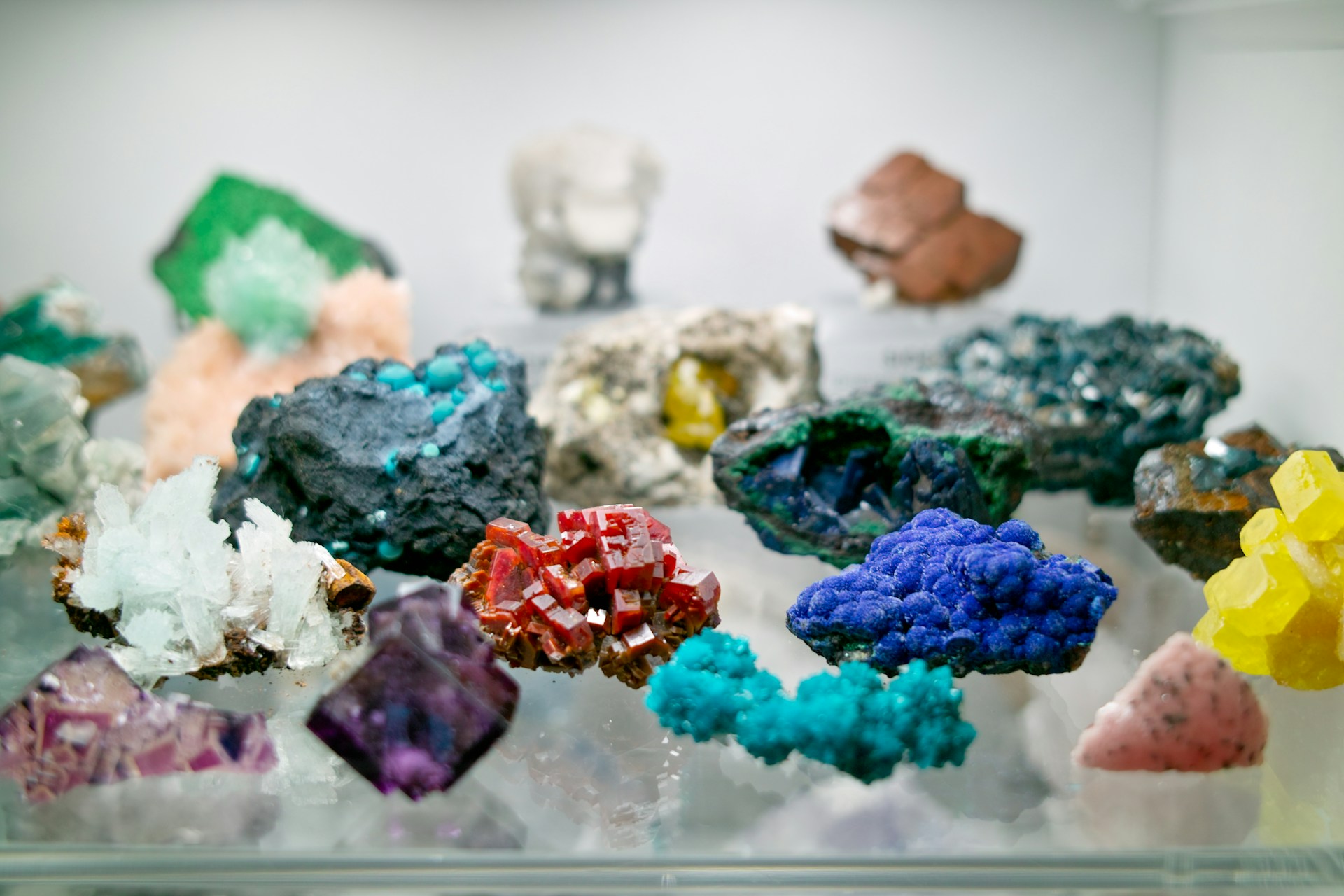
The mineral, gem, and fossil collecting market is a multi-billion-dollar global industry spanning public auctions, private sales, gem shows, and increasingly dominant online marketplaces. From a $50 ammonite at a local rock show to a $44.6 million Tyrannosaurus rex at Christie's, the range of the market is extraordinary. This page compiles current statistics on market size, auction records, show attendance figures, collector demographics, and the rapidly evolving online segment of the mineral and fossil trade.
Global Market Size & Revenue
The global mineral and fossil show circuit generates significant economic activity. The Tucson Gem and Mineral Show alone accounts for roughly $130 million in direct sales revenue during its one-week run, with total economic impact estimated at over $120 million for the Tucson region. When factoring in online sales, private dealer transactions, and auction house revenue, the total addressable market for mineral and fossil specimens likely exceeds several billion dollars annually. — Tucson Gem, Mineral & Fossil Showcase, 2024
Fossil Sales & Auction Records
The fossil auction market has experienced explosive growth since 2020. Major houses including Christie's, Sotheby's, Heritage Auctions, and Bonhams now hold dedicated natural history sales. Private land fossil sales (which are legal in the U.S.) supply most commercially available specimens, while museum-grade fossils command premium prices at auction. The commercial fossil market has raised ethical questions among paleontologists, who argue that private sales can limit scientific access to important specimens. — Society of Vertebrate Paleontology, 2024
Top Mineral & Gem Shows Worldwide
Hobbyist Demographics & Participation
The profile of the average mineral collector has been shifting. While traditional club-based collectors tend to be older (55+), the hobby's growth is concentrated in younger demographics drawn through Instagram, TikTok, and Etsy. This younger cohort tends to focus on aesthetic and elestial specimens, often prioritizing visual appeal over scientific rarity. — Mindat.org, 2024
Online Marketplaces & E-Commerce Trends
The shift toward online mineral sales has accelerated sharply since 2020. While major shows like Tucson remain critical for high-dollar and wholesale transactions, Etsy and eBay have democratized the market, allowing thousands of small-scale collectors and dealers to reach global audiences. Instagram has become a de facto showroom for high-end mineral dealers, particularly for aesthetic and esoteric specimens. — Mindat.org, 2024
Meteorite Market & Pricing
Meteorites occupy a unique niche in the collecting world — they are simultaneously scientific specimens, investment assets, and aesthetic objects. Lunar and Martian meteorites are among the rarest collectibles on Earth, with only a few kilograms of each known to exist. The legal market for meteorites discovered in the U.S. follows the same private-land principles as fossil and mineral collecting: specimens found on private land belong to the landowner and can be freely sold. — International Meteorite Collectors Association (IMCA), 2024
Fossil Preparation & Commercial Services
Fossil preparation is a highly specialized craft. Professional preparators use air scribes, micro-jacks, acid baths, and consolidation chemicals to remove rock matrix from delicate fossils. The field occupies an interesting intersection of science and commerce — many top preparators work both for museums and private collectors. Rates reflect the extreme skill and risk involved; a single misstroke with an air scribe can destroy millions of years of preservation. — Society of Vertebrate Paleontology, 2024
Legal Landscape of Fossil & Mineral Sales
The legal framework for fossil sales in the United States creates a two-tier market. Privately collected specimens from ranch land drive the high-end market, while public-land fossils are restricted to personal collections only. This has created tensions between the commercial fossil industry and academic paleontology. Several other countries, including Brazil, Mongolia, and China, have strict laws prohibiting the export of fossils — leading to a parallel market and legal complications for some international sales. — Society of Vertebrate Paleontology, 2024
For more on fossil collecting regulations and rockhounding participation, see our detailed Rockhounding Statistics 2026 page covering public land access rules and club data. And check out our beginner's guide to getting started with mineral collecting on a budget.
Frequently Asked Questions
How big is the global mineral and fossil collecting market?
The global mineral, gem, and fossil collecting market is estimated at $500 million+ annually in show and retail sales. The Tucson Gem and Mineral Show alone generates approximately $130 million in revenue over a single week. Online sales via Etsy, eBay, and specialized platforms add hundreds of millions more to the total each year. Including lapidary equipment, field tools, and display-case products, the broader U.S. market alone exceeds $1 billion annually.
What is the most expensive fossil ever sold at auction?
The most expensive fossil ever sold is Stan the T-Rex, which fetched $44.6 million at Christie's in 2020. Other record sales include a Deinonychus skeleton ($12.4 million, 2022), a Gorgosaurus skeleton ($6.1 million, 2022), and a Diplodocus skeleton ($1.8 million, 2022). Common fossil specimens like ammonites can sell for as little as $50 at local gem shows or on Etsy.
How many mineral collectors are there in the United States?
An estimated 1 to 2 million active mineral collectors and fossil hobbyists are in the United States, ranging from casual weekend collectors to serious competitive exhibitors. Approximately 70,000 collectors belong to organized AFMS-affiliated clubs, with the rest collecting independently. The hobby has seen a surge in younger participants since 2020, particularly through social media crystal communities on TikTok and Instagram.
Where are the top mineral shows in the world?
The largest mineral and gem shows globally include the Tucson Gem and Mineral Show (Arizona, USA — world's largest, ~55,000 attendees), the Munich Mineral Show (Germany — world's second largest), the Denver Gem and Mineral Show (Colorado, USA), the Sainte-Marie-aux-Mines show (France), the Tokyo Mineral Show (Japan), and the Springfield (Massachusetts) Mineral Show. Major shows host hundreds to thousands of dealers and attract international buyers and sellers.
Can fossils legally be sold in the United States?
Yes, fossils found on private land can be legally sold in the United States — most commercially available specimens come from private ranch land in states like Montana, Wyoming, and South Dakota. However, fossils collected from federal public lands (BLM, National Forests, National Parks) cannot be sold. The 2009 Paleontological Resources Preservation Act strictly prohibits commercial sale of vertebrate fossils from public lands. Common invertebrate fossils collected under casual-use rules may be kept but generally cannot be commercially sold.