Fossil hunting is one of the most accessible forms of rockhounding. Unlike gemstone collecting, which often requires specialized gear and mining claims, surface fossil hunting is largely a matter of knowing the right formations, respecting access rules, and training your eyes. Millions of fossils erode out of sedimentary rock every year. Most go unnoticed.
This guide gives you state-by-state locations with specific formations, land access information, and what types of fossils you're likely to find. Not a vague list of states — practical field information you can use to plan a trip.
What Are the Fossil Access Rules Before You Go?
The single most important thing to understand before fossil hunting on US public land is the difference between land designations:
- National Parks (NPS): Zero collection. Not a single pebble, fossil or otherwise. Violations carry significant fines. This is non-negotiable.
- BLM (Bureau of Land Management) land: Casual collection of common invertebrate fossils (shells, corals, plant material) in reasonable personal quantities is legal without a permit. Vertebrate fossils require a permit. The BLM manages more than 245 million acres — this is where most legitimate public fossil collecting happens.
- National Forests (USFS): Similar rules to BLM — casual collection of invertebrate fossils is typically permitted. Check with the specific forest ranger district as policies vary.
- State land: Rules vary by state and land type. Some states are permissive; others prohibit all fossil collection. Always verify with the state land management agency.
- Private land: You need landowner permission, full stop. With permission, what you find is generally yours to keep.
When in doubt, contact the local BLM field office or ranger district before your trip. Staff are generally helpful and can often direct you to productive public sites.
What Are the Western States: The Core of US Fossil Country?
Montana
Montana is arguably the top dinosaur state in the US. The Hell Creek Formation — which runs through eastern Montana, North Dakota, South Dakota, and Wyoming — is one of the most productive dinosaur-bearing formations on earth, famous for Tyrannosaurus, Triceratops, and Edmontosaurus. The Two Medicine Formation in the northwest has produced significant hadrosaur nesting sites.
Where to go: The Charles M. Russell National Wildlife Refuge in central Montana allows casual collection of common fossils on BLM-managed portions. The town of Jordan is the center of Hell Creek country — local landowners sometimes offer fossil hunting access for a fee.
What to look for: Invertebrate marine fossils in the Cretaceous seas (ammonites, clams, oysters) are far more common than dinosaur bone and can be collected freely. Dinosaur bone on federal land requires a permit and must not be removed.
Wyoming
Wyoming's Morrison Formation (Jurassic, roughly 155 million years old) is one of the world's most significant dinosaur deposits. It runs through the state in a broad band, exposing classic sauropods like Brachiosaurus and Camarasaurus as well as Allosaurus and Stegosaurus. The Fossil Butte National Monument in the southwest protects world-class Eocene fish fossils — you can't collect there, but nearby private quarries sell digging access.
Where to go: The Kemmerer area near Fossil Butte has several private fee-dig operations where you can excavate fish fossils (Knightia and others) and keep your finds legally. BLM land throughout the Green River Basin has accessible marine and freshwater invertebrates.
What to look for: Knightia (small Eocene fish) are the most collectable Wyoming fossil — they're abundant, legally removable from private quarries, and make beautiful display pieces. On BLM land, look for bivalves, ammonites, and belemnites in Cretaceous marine formations.
Colorado
Colorado spans multiple major fossil formations. The Morrison Formation produces Jurassic dinosaurs in the western part of the state. The Denver Formation has Cretaceous marine material. And the Florissant Fossil Beds National Monument — a National Park, so no collecting — preserves Eocene insect and plant fossils of extraordinary quality.
Where to go: BLM land along the Book Cliffs and in the Piceance Basin is open for collecting common invertebrates. The Moffat County area near Dinosaur National Monument has accessible Morrison Formation exposures on BLM land. Cañon City has a history of productive private dinosaur quarries.
What to look for: Cretaceous marine invertebrates — ammonites, bivalves, shark teeth — on BLM land in central and eastern Colorado. Plant fossils in Paleocene and Eocene beds in the Denver Basin.
Utah
Utah is dense with fossil formations and some of the most beginner-accessible public fossil hunting in the country. The BLM manages enormous tracts where casual collecting is permitted. The state fossil is the Allosaurus, and Jurassic bones are found throughout the Colorado Plateau.
Where to go: The Cleveland-Lloyd Dinosaur Quarry near Price (managed by BLM) is a world-famous Jurassic bone bed. Collecting is not permitted at the quarry itself, but surrounding BLM land has accessible Cretaceous marine invertebrates. The San Rafael Swell has exposed Permian, Triassic, and Jurassic formations with accessible material.
What to look for: Triassic wood in the Chinle Formation (similar to Arizona's Petrified Forest material). Cretaceous ammonites and bivalves in the Cedar Mountain and Mancos Shale formations on open BLM land.
South Dakota
South Dakota's Badlands expose one of the world's greatest collections of Oligocene mammal fossils — prehistoric horses, rhinos, saber-toothed cats, and camels in unusual abundance. Badlands National Park protects the core deposit (no collecting), but BLM and private land surrounds it.
Where to go: The Buffalo Gap National Grassland adjacent to Badlands National Park has BLM-managed areas where surface collecting is permitted. The Faith area in the north has Hell Creek Formation exposures. Black Hills private fee-dig sites offer hands-on experience.
What to look for: Titanothere (ancient rhino-like mammals) bone fragments, turtle shell, and small mammal teeth eroding out of the Oligocene badland exposures. Marine Cretaceous material — mosasaur, plesiosaur fragments — erodes periodically near Buffalo Gap.
Great Plains States
Kansas
Kansas sits at the bottom of what was once the Western Interior Seaway — a shallow ocean that divided North America during the Cretaceous. The result is one of the richest marine fossil deposits in the country: mosasaurs, plesiosaurs, Xiphactinus (a giant predatory fish), sharks, and abundant invertebrates.
Where to go: The Smoky Hill Chalk in western Kansas (Ellis and Logan counties) is the core of Kansas's marine fossil country. Much of this land is privately held — the Kansas Geological Survey and local fossil clubs can connect you with landowners who allow access. The Fick Fossil and History Museum in Oakley showcases what's possible here.
What to look for: Shark teeth, mosasaur vertebrae, and Cretaceous bivalves and ammonites erode from chalk exposures after rains. Check stream cuts and erosion gullies in the chalk formations.
Nebraska
Nebraska's central and western regions expose Miocene deposits famous for mammal fossils — horses, camels, rhinos, mastodons. Ashfall Fossil Beds State Historical Park (Antelope County) is one of the most spectacular fossil sites in the world: a buried watering hole with complete skeletons of Miocene animals asphyxiated by volcanic ash. No collecting allowed, but the visitor experience is extraordinary.
Where to go: The Oglala National Grassland in northwestern Nebraska has BLM land with accessible Oligocene and Miocene exposures. Shark teeth erode from the Niobrara Chalk in the northwest similarly to Kansas.
Southern States
Texas
Texas is enormous and geologically diverse. The Big Bend area exposes Cretaceous marine formations and has produced some of the largest pterosaurs ever found (Quetzalcoatlus). Central Texas has extensive Cretaceous marine deposits. The Gulf Coast has shark teeth and marine material eroding from beach and river sediments continuously.
Where to go: The Brazos River in central Texas erodes Cretaceous material including ammonites, bivalves, shark teeth, and occasional marine reptile fragments. The Gulf Coast beaches — particularly around Shark Bay near Corpus Christi — produce shark teeth and marine fossils after storms. Big Bend Ranch State Park (not Big Bend National Park) allows surface collecting.
What to look for: Shark teeth (Squalicorax and Cretoxyrhina) and ammonites from Cretaceous exposures. Pleistocene megafauna bone (mammoth, glyptodont) from river gravels in central Texas.
Mississippi and Alabama
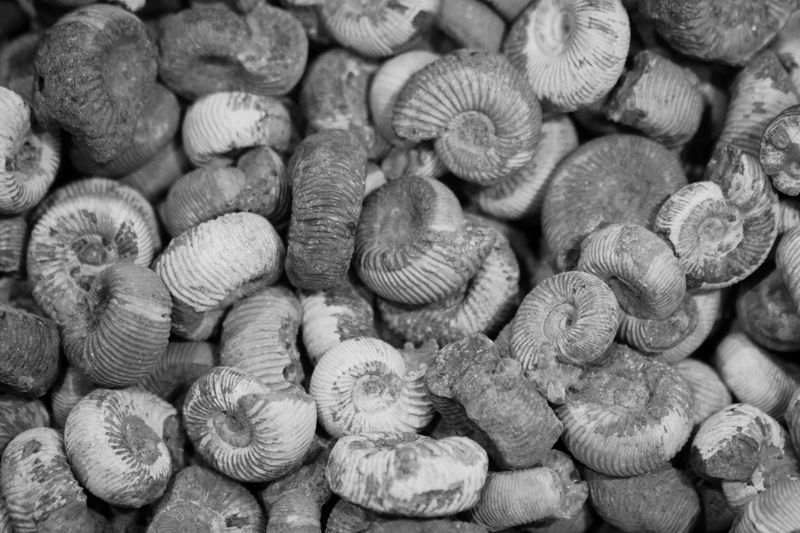
The Gulf Coastal Plain preserves Cretaceous and Eocene marine fossils. Alabama's Harrell Station in Clarke County is one of the most productive Cretaceous marine sites on the east side of the Mississippi, with ammonites, shark teeth, mosasaur fragments, and abundant invertebrates accessible on private and state-managed land.
Eastern States
Maryland and Virginia
The Chesapeake Bay region exposes Miocene marine sediments along its shorelines — among the most accessible fossil hunting in the eastern US. The famous Calvert Cliffs State Park in Maryland allows surface collecting of shark teeth and marine invertebrates that wash onto the beach.
Where to go: Calvert Cliffs State Park (beach access only, no cliff climbing — fossils wash down naturally). Westmoreland State Park in Virginia has similar Miocene beach material. The Rappahannock River in Virginia exposes Pliocene and Miocene sediments with shark teeth and ray crushing plates.
What to look for: Meg teeth (Otodus megalodon) — the giant Miocene shark — erode from the Calvert and Choptank Formations. Smaller mako and lemon shark teeth are abundant. Whale ear bones, ray crushing plates, and Miocene invertebrate shells are common finds.
North Carolina
Aurora, NC is the site of one of the world's most productive phosphate mines — and the Pamlico Formation exposed there contains world-class Miocene marine fossils including Megalodon teeth. Nutrien's Aurora Mine allows public fossil hunting on their spoil piles by reservation — a rare chance to dig through material that would otherwise be inaccessible.
What to Bring for a Fossil Hunting Trip
You don't need specialized equipment to start surface hunting, but the right basic kit makes a real difference:
- Rock hammer and chisels: For splitting shale and extracting specimens from matrix. Essential even for casual collecting. See our rock hammer guide for the right choices.
- Hand lens (10x loupe): For examining texture and identifying fossil structure in the field. A 10x triplet loupe is the standard — $15–30 and indispensable. Our loupe guide covers what to look for.
- Daypack with padding: Fossils are fragile. Carry newspaper, foam, or bubble wrap to protect specimens.
- Water, sun protection, and sturdy boots: Most fossil country is hot, exposed, and remote. Dress for it.
- GPS or topo map app: Mark productive exposures for return visits. The free app CalTopo works well for both planning and field navigation.
- Camera: Photograph specimens in place before extracting — especially anything that looks significant. Record location data.
For a full breakdown of what to bring on any rockhounding or fossil hunting trip, check our complete rockhounding gear guide.
Recommended Products
Frequently Asked Questions
Where is the best place to find fossils in the United States?
The American West — Montana, Wyoming, Colorado, Utah, and South Dakota — has the highest density of productive public fossil sites. For accessible beginner collecting, Calvert Cliffs in Maryland and the BLM land around the Green River Basin in Wyoming are hard to beat. The Aurora Mine in North Carolina is one of the best places in the world to find Megalodon teeth.
Is it legal to collect fossils on public land?
It depends on land type. On BLM land, casual collection of common invertebrate fossils in personal quantities is legal without a permit. Vertebrate fossils on any federal land require a permit. National Parks prohibit all collection. State rules vary — always verify with the land management agency before collecting. Failure to follow the rules carries real penalties.
What tools do I need to find fossils?
For surface hunting, you need good eyes, boots, and patience. A rock hammer, chisels, a soft brush, and a hand lens round out a practical beginner kit. Most fossil hunting is walking and looking, not digging — train your eyes to spot texture differences between rock and bone/shell material before spending money on gear.
How do I know if I found a fossil?
Fossils have organic structure: patterned surfaces (bone cells, growth rings, shell ribs), bilateral symmetry in shells and marine animals, or spongy internal texture in bone visible at a break. Unlike surrounding rock, fossil material typically has a distinct texture or pattern. When uncertain, compare to reference images or bring it to a natural history museum or fossil club — most are happy to help identify specimens.
Can I keep fossils I find?
Common invertebrate fossils from BLM land can be kept for personal use. Vertebrate fossils on federal land must stay in place or require a permit to collect. On private land with landowner permission, your finds are yours. Selling fossils collected from federal land without a permit is a federal offense.
Get weekly guides from RockhoundGuide
No spam. Unsubscribe anytime.