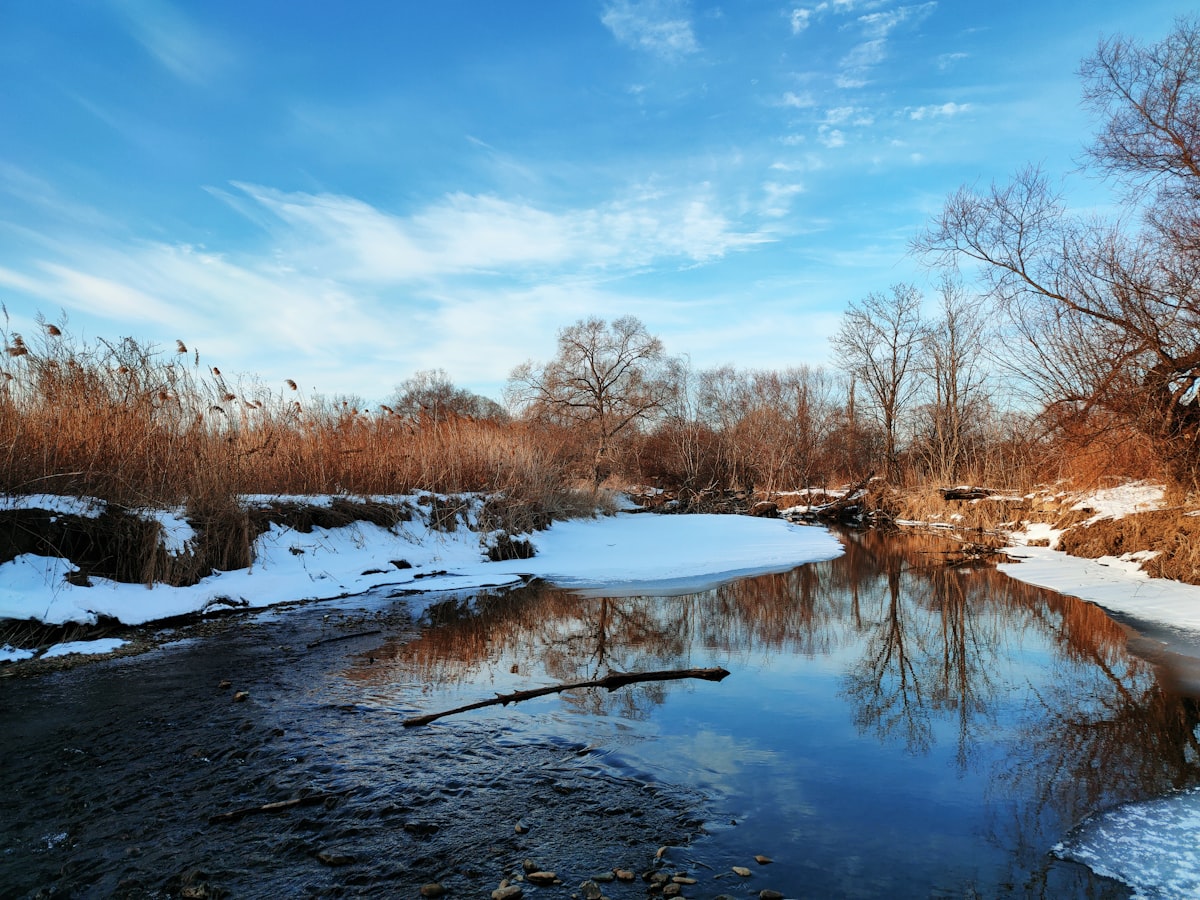
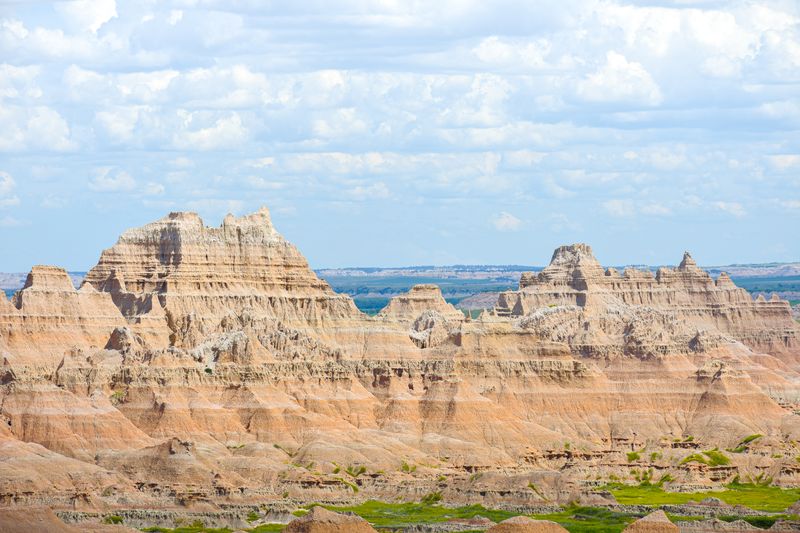
South Dakota is a state of geological extremes. In the east, flat glaciated plains roll toward Iowa and Minnesota with barely a rock to be seen. In the west, the landscape erupts into the rugged Black Hills — an ancient oval dome of Precambrian granite and schist that punches through the surrounding sedimentary plains like a geological fist — and the surreal carved landscape of the Badlands, where millions of years of erosion have cut the Great Plains into a maze of buttes, pinnacles, and draws exposing one of the world's most complete records of Oligocene mammals.
For collectors, this variety is a gift. South Dakota offers mineral collecting in the Black Hills pegmatites, fossil hunting in the Badlands and Pierre Shale, placer gold panning in historic mining districts, and the search for Fairburn agates — arguably the most beautiful fortification agates in North America and designated as the state's official gem. Few states pack this much collecting diversity into a single trip.
This guide covers each major South Dakota collecting type in detail, including the land access rules that determine where you can legally go, the seasons that maximize your chances, and the specific techniques that experienced South Dakota collectors use to find the good stuff.
South Dakota's Geological Story
South Dakota's collecting wealth comes from two very different geological episodes separated by over two billion years.
The Black Hills form a Precambrian island of very old rocks — primarily granite, schist, and quartzite — that were intruded and metamorphosed between 1.7 and 2.5 billion years ago. During the Laramide Orogeny (roughly 70–50 million years ago, the same mountain-building event that created the Rocky Mountains), this ancient basement block was uplifted, doming the overlying sedimentary layers upward and outward to create the distinctive oval Hills structure. The Precambrian core was then exposed by erosion over tens of millions of years.
Critically for collectors, the Black Hills Precambrian rocks include some of the most mineralogically rich granitic pegmatites in the United States. These coarse-grained intrusions — some enormous, covering acres — crystallized slowly from mineral-rich magmatic fluids late in the cooling sequence, allowing rare elements (lithium, boron, beryllium, rare earth elements) to concentrate and form crystals of tourmaline, beryl, lepidolite, and lithium phosphates. The USGS mineral resources data for South Dakota documents hundreds of Black Hills pegmatite localities with documented mineral occurrences.
The Badlands tell a completely different story. The White River Badlands expose a thick sequence of Oligocene sedimentary rocks — the Brule and Chadron Formations — deposited in ancient river floodplains and lake systems 28–34 million years ago. These sediments entombed the mammals of the "Age of Mammals" in extraordinary numbers and completeness, making the Badlands one of the world's most important fossil vertebrate localities. Below the Oligocene rocks lie Cretaceous Pierre Shale — black marine shale packed with ammonites, mosasaur bones, and other sea life from the Interior Seaway that covered central North America 70–80 million years ago.
South Dakota Rockhounding Locations at a Glance
| Location | Region | What to Find | Difficulty | Fee? |
|---|---|---|---|---|
| Fall River County (Fairburn agate country) | Southern Black Hills / Great Plains | Fairburn agates (rare), agatized wood, chalcedony | Hard (persistence required) | Private land access fee (~$20–$50/day) |
| Ponderosa Mine / Hill City area | Southern Black Hills, Pennington Co. | Tourmaline, beryl, mica books, rose quartz, feldspar | Easy (fee-dig) | Yes (~$10–$25/person) |
| Custer / Keystone pegmatite district | Southern Black Hills, Custer Co. | Rose quartz, smoky quartz, tourmaline, spessartine garnet | Moderate | Free (NF land); fee at some operations |
| Deadwood / Lead placer streams | Northern Black Hills, Lawrence Co. | Placer gold, pyrite, quartz veins | Moderate | Free (BLM / NF); pan rental at outfitters |
| Buffalo Gap National Grassland | South of Badlands NP, Jackson Co. | Oligocene mammal fossils, Pierre Shale ammonites, chalcedony | Moderate–Hard | Free (BLM land) |
| Jewel Cave / Wind Cave area | Southern Black Hills, Custer Co. | Calcite, dolomite, cave-associated minerals (surface areas) | Moderate | Free (NF areas); NPS tours for caves |
Fairburn Agates — The State Gem
Fairburn agates are South Dakota's most coveted collectible — and among the most prized agates in the entire world. Designated as the state gem of South Dakota, Fairburns have been drawing collectors from across the country to the southern Black Hills for over a century, and for good reason: a high-quality Fairburn agate is a work of art, with tight fortification banding in vivid reds, oranges, whites, and creams that looks almost too perfect to be natural.
The name comes from the town of Fairburn in Fall River County, near where the first scientifically described specimens were found. The agates form as chalcedony void-fills in Pierre Shale — the Cretaceous black marine shale that underlies much of the Great Plains. During diagenesis, silica-rich fluids circulating through the shale precipitated chalcedony in concentric layers inside voids and fractures, creating the characteristic fortification pattern. The vivid color comes from iron oxide (red, orange) and manganese oxide (black) inclusions in alternating bands. What makes Fairburns exceptional compared to other fortification agates is the tightness of their banding — sometimes 20 or more distinct bands per centimeter — and the clarity of the color transitions.
Where to find Fairburn agates: The primary territory is the "agate country" of southern Fall River County — roughly the area between Edgemont, Pringle, and Oelrichs, and extending south into the Pine Ridge Indian Reservation area. The terrain is rolling butte country with Pierre Shale exposed in creek drainages and weathered slopes. The agates are found by surface searching — walking slowly across appropriate terrain and looking for the distinctive black-and-red banded pattern. They range from pea-sized fragments to fist-sized nodules; anything over 2 inches with good pattern is a significant find.
The catch: virtually all of the best Fairburn agate territory is on private ranch land. Landowners have historically charged a modest daily access fee ($20–$50 per person per day is typical) and many are welcoming to collectors who approach respectfully. The ranches around Pringle and Edgemont are the traditional starting point. The South Dakota Geological Survey can point collectors toward general geological information about the agate-bearing formations. Connecting with the AFMS-affiliated South Dakota gem clubs is the best way to get current landowner contacts and access information.
Genuine Fairburn agates have been heavily faked and misidentified — common "Fairburn" agates on the market are often Brazilian agates dyed to mimic the coloration. A true Fairburn will be found in place (South Dakota), will show the characteristic tight fortification with slightly irregular contours (not the perfectly mechanical pattern of sliced and dyed commercial agates), and will have natural weathering rind. When in doubt, compare to verified specimens on Mindat.org's agate pages and consult experienced Black Hills collectors.
Black Hills Pegmatites — Tourmaline, Beryl & Mica
The Black Hills of South Dakota contain one of the greatest concentrations of mineralogically complex granitic pegmatites in North America. These coarse-grained intrusive rocks — products of the very last stages of granitic magma crystallization, when residual fluids rich in volatiles and rare elements form enormous crystals in slowly cooled pockets — have produced mineral specimens of extraordinary size and quality for over 150 years of mining and collecting.

Key minerals found in Black Hills pegmatites:
- Tourmaline: Black schorl is common in many pegmatites. More exciting are the gem-quality elbaite tourmalines — green, pink, and watermelon (pink core with green rim) — that have been found at several Black Hills localities including the Tin Mountain area near Custer. Museum-quality elbaite crystals from the Black Hills rival those from Maine or Brazil. Most gem tourmaline is from old mining operations, but fresh material occasionally turns up in collecting zones on National Forest land.
- Beryl: The Black Hills have produced aquamarine (blue-green beryl), heliodor (yellow beryl), and massive greenish beryl in large crystals. The Etta Mine near Keystone produced giant spodumene crystals (a lithium pyroxene, not beryl, but equally impressive) measuring over 40 feet in length — among the largest crystals ever found anywhere. For collectors, beryl crystals in the 1–5 cm range can be found in creek drainages draining pegmatite-rich areas around Custer and Keystone.
- Mica books: Muscovite mica in large, flexible books (crystals measured in inches) is abundant in many Black Hills pegmatites. Lepidolite (purple lithium mica) also occurs in lithium-rich pegmatite zones. Mica books make spectacular display pieces and are fairly easy to collect from weathered pegmatite outcrops.
- Feldspar: Microcline feldspar occurs in very large crystals (sometimes called "giant blocky feldspars") in the coarse core zones of major pegmatites. Some microcline in the Black Hills shows the blue-green iridescence of amazonite. Cleavelandite (platy white albite) is also common.
- Spessartine garnet: Spessartine — the orange-red manganese garnet — occurs in some Black Hills pegmatites associated with lepidolite and manganese-rich zones. Not as common as in some other districts, but exceptional when found.
- Lithium phosphates: Advanced lithium pegmatites in the Black Hills contain a suite of exotic phosphate minerals including triphylite, lithiophilite, montebrasite, and the brilliant blue lazulite. These are collector prizes requiring good locality knowledge to find.
The best accessible Black Hills pegmatite collecting is through organized fee-dig operations. The Ponderosa Mine near Hill City offers public dig days on actual mine dumps with good mineral diversity — you'll typically find tourmaline fragments, beryl chips, mica books, and occasional gem-quality pieces. Contact the Black Hills Badlands & Lakes Association for a current list of operations open to the public, as access changes seasonally. National Forest land in the Harney Peak (Black Elk Peak) district allows surface collecting without a permit — the creek drainages draining northwest toward Rapid City have historically produced float material from upstream pegmatites.
Rose Quartz in Pennington County
South Dakota's Black Hills are one of the country's major sources of massive rose quartz — and Pennington County in the southern Hills is the heart of that production. Rose quartz here occurs in large pegmatite bodies as massive, coarse-grained material ranging from barely-pink to deep translucent rose. The color is caused by trace amounts of titanium, iron, and manganese incorporated into the quartz crystal structure, and in the best South Dakota material, it achieves a depth and saturation that rivals classic Brazilian rose quartz.
The most productive rose quartz collecting areas are in creek drainages and road cuts in the National Forest south and east of Custer, particularly along Forest Roads in the southern Harney Range. The Glendale area (Glendale Township) and roads between Custer and Hot Springs have historically produced the most material. The quartz occurs as float boulders and as in-place masses in weathered pegmatite outcrops.
Rose quartz collecting technique in the Hills is straightforward: walk slowly along creek beds and road cuts looking for pink-tinged quartz masses in the gravel and in outcrops. Any piece showing good color and clarity is worth collecting. Very large masses (10+ pounds) can make excellent garden display pieces; fist-sized pieces are good tumbler stock; material with good translucency and strong color is worth keeping as lapidary rough for cabbing. For guidance on tumbling your South Dakota rose quartz, see our rock tumbler guide and our article on the best rocks to tumble.
The National Forest permit guidelines for the Black Hills specify that casual collecting of up to 25 pounds per day for personal use is permitted on National Forest land without a permit. Commercial collection requires a special-use permit from the Black Hills National Forest supervisor's office.
Gold in the Deadwood & Lead Area
The Black Hills gold rush of 1876 — triggered by Custer's expedition into the Hills the previous year, which reported gold in the streams — was one of the last great American gold rushes. The Homestake Mine at Lead became the largest and deepest gold mine in the western hemisphere, producing over 40 million troy ounces of gold over 125 years of operation before closing in 2002. The Deadwood area, 4 miles north, became one of the most famous mining boom towns in American history.
For collectors today, placer gold is still found in the creek drainages of the northern Black Hills. The primary streams to try are:
- Whitewood Creek: Drains the Lead/Deadwood area and has historically been the most productive northern Hills placer stream. BLM and National Forest land along the creek corridor permits hand panning without a permit.
- Spearfish Creek: The upper Spearfish Canyon stretch has produced placer gold and passes through spectacular scenery. Best tried after spring runoff when gravel bars are freshly reworked.
- Castle Creek and tributaries: Drain the Harney Peak area and have produced gold in minor quantities historically. More interesting for mineral collectors (pegmatite float) than serious gold panners.
Realistic expectations: placer gold in the northern Black Hills is genuine but sparse. Most panners find small "colors" — tiny flakes visible under magnification — rather than nuggets. A full day of careful panning in good spots might produce 0.01–0.1 grams of gold. The experience and scenery are the primary rewards. For technique, see our complete guide on how to pan for gold.
In addition to placer gold, gold-bearing quartz veins occur throughout the northern Black Hills greenstone-belt geology. Visible "free gold" in quartz specimens is extremely rare in accessible locations — the productive vein systems are either claimed or deeply buried. But gold-associated minerals including arsenopyrite, pyrite cubes, and chalcopyrite can make excellent display specimens from outcrop float in the northern Hills greenstone areas.
Badlands — Fossils & Pierre Shale
Badlands National Park is one of the great geological spectacles of the American West — and one of the most important fossil vertebrate sites in the world. The park protects the White River Badlands, where millions of years of erosion have cut through Oligocene sedimentary rocks to expose an extraordinary record of the Eocene–Oligocene mammal transition.
The key rule: all fossil collecting is prohibited in Badlands National Park. Any fossil found in the park must be reported to park rangers and left in place. This is strictly enforced, and violations carry significant penalties. The scientific value of the Badlands fossil record depends on specimens being found in their original geological context, not removed by collectors.
However, the adjacent Buffalo Gap National Grassland — BLM-administered land surrounding and south of the park — does permit surface fossil collecting for personal use. This is where serious collectors work the Badlands fossil terrain legally. The Grassland has the same Oligocene and Pierre Shale formations as the park, and surface finds of fossil bone, ammonites, and other material are legally collectable.
What to find in the Badlands and surrounding Pierre Shale formations:
- Titanothere bones: The large Brontotheriidae (horse-sized to rhinoceros-sized herbivores) are the signature Badlands fossil. Limb bone fragments and skull pieces are the most common surface finds.
- Mesohippus (early horse): Three-toed horses the size of a large dog left abundant jaw fragments and isolated teeth in the Badlands Chadron Formation.
- Ammonites: The underlying Pierre Shale (Cretaceous) contains beautiful septate ammonites, particularly Placenticeras and Baculites (the latter being straight-shelled forms). These are found where Pierre Shale is exposed below the Oligocene section.
- Mosasaur bones: Pierre Shale has produced mosasaur (large marine lizard) bones and vertebrae. These Cretaceous marine predators swam in the Interior Seaway that covered South Dakota 75 million years ago.
- Chalcedony/chert nodules: The White River Formation contains chert nodules and occasional chalcedony pieces that make interesting collecting finds alongside the fossils.
For an authoritative reference on Badlands fossils, the National Park Service Badlands paleontology pages provide excellent species summaries and geological context. The FossilGuy.com guide to Badlands fossils is also excellent for identification help.
Custer State Park & Jewel Cave Area
Custer State Park — one of the largest state parks in the United States — occupies a spectacular section of the southern Black Hills and offers some accessible rockhounding, though collecting regulations within the park itself are restrictive. The park's geology includes Precambrian granite, schist, and pegmatite, and numerous creek drainages cutting through the park carry float material downstream.
The most productive collecting in the Custer area is on adjacent Black Hills National Forest land rather than inside the state park. The Forest boundary interdigitates with the park boundary in complex ways — download the National Forest administrative map to determine jurisdiction before collecting. On National Forest land adjacent to the park, surface collecting of rocks and minerals including rose quartz and tourmaline float is permitted.
Jewel Cave National Monument — the world's third-longest known cave system — is surrounded by National Forest land with interesting surface mineralogy. The cave itself (not accessible for collecting) contains spectacular aragonite crystals, calcite boxwork, and hydromagnesite "moonmilk," but the surface exposures of Madison Limestone in the cave area show the same Paleozoic carbonate rocks that host the cave system. Collecting is prohibited within the monument boundary; the surrounding Forest land is open.
The Black Hills area also has interesting calcite and dolomite exposures in the Paleozoic limestone that surrounds the Precambrian core. Calcite rhombohedra and occasional crystal clusters occur in fracture zones. Near Edgemont and Hot Springs, the limestone exposures have produced nice calcite specimens for visitors willing to search.
Fee-Dig Operations in South Dakota
Several South Dakota operations offer guided or self-directed fee-dig access to mineral-rich sites, making them excellent options for collectors who want guaranteed finds rather than open-country searching:
- Ponderosa Mine (Hill City area): One of the longest-running Black Hills public dig sites, offering access to pegmatite mine dumps with tourmaline, mica, rose quartz, and feldspar. Admission typically $10–$25/person. Call ahead as hours and availability vary seasonally.
- Wade's Gold Mill (Hill City): Offers gold panning experiences in an historic setting, using material seeded from actual Black Hills gold-bearing rock. Good for families and beginners to learn panning technique before hitting the real streams.
- Various Fairburn agate ranches: Several private ranches in Fall River County offer paid access for Fairburn agate hunting. These are typically arranged through direct contact with landowners or through gem club connections. Rates vary ($20–$50/day per person is typical). The hunt itself is excellent — walking butte country looking for agates — regardless of what you find.
Land Access & Collecting Rules in South Dakota
South Dakota collecting regulations follow the standard federal-land framework:
BLM Land
Bureau of Land Management land in South Dakota (primarily in the western part of the state) permits casual surface collecting of up to 25 pounds per day for personal, non-commercial use without a permit. No mechanized equipment. Vertebrate fossil collecting requires coordination with the BLM field office. The BLM South Dakota Field Office can advise on specific sites.
National Forest Land
Black Hills National Forest permits casual collection of rocks and minerals for personal use (up to 25 lbs/day) without a permit. Significant vertebrate fossil material requires a permit. No motorized tools. Commercial collection requires a special-use permit. Contact the Black Hills National Forest for current rules and maps.
National Parks and Monuments
All collecting is prohibited in Badlands National Park, Jewel Cave National Monument, Wind Cave National Park, and Mount Rushmore National Memorial. Report any fossils found in these areas to park rangers.
State Parks
Collecting rocks, minerals, or fossils is prohibited in South Dakota State Parks including Custer State Park and Palisades State Park.
Private Land
Most of the best South Dakota sites — Fairburn agate country especially — are on private land. Obtain written or verbal permission before entering. Never assume abandoned-looking land is public.
Best Times to Go Rockhounding in South Dakota
Late Spring (May – June)
May and June are excellent in the Black Hills — snow is gone from most roads, spring runoff has subsided in most creeks, and creek beds are accessible for float collecting. Badlands country can be muddy early May but firms up quickly. Fairburn agate hunting is good as spring erosion freshens surfaces.
Summer (July – August)
Peak tourist season in the Black Hills, but also excellent collecting conditions. Long days give maximum field time. Thunderstorm risk in the afternoons — plan morning collecting and seek shelter by early afternoon. The Badlands are brutally hot in July; collect early or late in the day.
Fall (September – October)
Fall is arguably the best season overall. Crowds thin dramatically after Labor Day, weather is excellent (warm days, cool nights), and the fall colors in the Black Hills are spectacular. Creek and drainage collecting is at its best after the summer storm season has reworked material. Fairburn agate hunting in the buttes is prime.
Winter
South Dakota winters are severe. Most back-country roads in the Hills and Badlands become impassable. Stick to lowland sites accessible by paved road in winter if you must collect. The southern Hills around Hot Springs and Edgemont have somewhat milder conditions than the higher elevations.
Gear for South Dakota Rockhounding
South Dakota collecting covers enough different terrain types that gear selection depends on your primary focus:
🔨 Rock Hammer
Essential for pegmatite collecting in the Black Hills. A good 22–32 oz geological hammer handles both extraction from weathered pegmatite and splitting schist to find fresh mineral faces. The Estwing E3-22P is the reliable standard. For delicate pegmatite work (extracting tourmaline crystals without breaking them), a lighter chisel hammer (14 oz) with cold chisels gives better control than a heavy rock pick.
View Rock Hammers on Amazon →🥾 Serious Hiking Boots
Fairburn agate hunting involves miles of walking across rough butte country. Ankle support is critical — the terrain is uneven and the vegetation includes prickly pear cactus and yucca. Mid-weight leather hiking boots with good ankle support and Vibram soles are the standard choice for serious Fairburn hunters. Lightweight trail runners don't provide enough ankle protection for all-day butte walking.
View Hiking Boots on Amazon →📗 Black Hills Mineral & Rockhounding Guide
Rockhounding South Dakota by Edward Whalen (Falcon Guides series) is the standard state-specific guide with detailed site descriptions and maps. The Mineralogy of the Black Hills by James Norton (South Dakota School of Mines) is the definitive scientific reference on Black Hills minerals. Both are worth having in your pack. For agate identification, Agates of the Northern Plains by Scott Wolter is the authoritative reference for Fairburn and related Prairie agates.
View South Dakota Field Guides on Amazon →Also bring: plenty of water (western South Dakota in summer is serious dehydration territory), a wide-brim hat, sunscreen, a basic first aid kit with tweezers (prickly pear spines are a real hazard), and offline maps downloaded for the Black Hills and Badlands area (cell coverage in remote areas is unreliable). See our full rockhounding gear guide for a complete packing list.
Frequently Asked Questions
Is rockhounding legal in South Dakota?
Yes, on appropriate land. BLM and National Forest land permit casual collecting (up to 25 lbs/day personal use). National parks and state parks prohibit all collecting. Private land requires permission. Most Fairburn agate territory is private — contact landowners directly or through gem club contacts for paid access.
What is a Fairburn agate and where can I find one?
Fairburn agates are South Dakota's state gem — highly prized fortification agates with tight banding in vivid reds, oranges, whites, and creams. They form in Pierre Shale and are found by surface searching in butte country in Fall River County (Edgemont, Pringle, Oelrichs area). Most productive territory is private land with paid access. They are rare, demanding patience, but worth every mile walked.
Where is rose quartz found in South Dakota?
Rose quartz occurs in Pennington County and adjacent Custer County in the southern Black Hills, in pegmatite bodies exposed in creek drainages and road cuts. The Custer and Keystone areas are the traditional collecting zones. National Forest land in the southern Harney Range allows surface collecting of rose quartz float without a permit.
Can you find gold in South Dakota?
Yes. Placer gold occurs in creek drainages in the northern Black Hills (Whitewood Creek, Spearfish Creek) and is legally collectable on BLM and National Forest land by hand panning without a permit. Amounts are typically small — fine flakes rather than nuggets — but the gold is real and the experience is genuinely enjoyable in the historic Deadwood mining district.
What fossils can be found in the Badlands of South Dakota?
Badlands National Park's Oligocene rocks contain titanothere bones, early horse (Mesohippus) remains, early carnivore fossils, and giant tortoises. Pierre Shale contains ammonites and mosasaur bones. All collecting is prohibited in the park — report finds to rangers. Adjacent Buffalo Gap National Grassland (BLM) permits surface collecting of fossil material for personal use.
Get weekly guides from RockhoundGuide
South Dakota site reports, Fairburn tips, Black Hills collecting guides. No spam. Unsubscribe anytime.