
Florida doesn't look like rockhounding country. It's flat, swampy, and lacks the dramatic outcrops and exposed mountain geology that most collectors picture when they think about finding minerals in the field. There are no gold placer streams, no pegmatite-studded cliffs, no obsidian flows. What Florida has instead is something rarer and in many ways more remarkable: an extraordinarily rich Cenozoic fossil record locked inside phosphate-bearing sediments that are constantly being reworked by rivers, waves, and commercial mining — and delivered directly to collectors who know where to look.
The numbers are staggering. Florida's phosphate deposits contain the densest concentration of Miocene vertebrate fossils in the world. The Florida Museum of Natural History's vertebrate paleontology division — one of the largest such collections in the country — was built largely on material from central Florida's phosphate country. And much of that material is still out there, washing up on beaches, sitting in river gravel, and lying exposed in mining spoil piles waiting for a patient collector with a wire screen and a willing back.
This guide covers every major Florida fossil and mineral locality in actionable detail — where to go, what to expect to find, how to access it legally, and what gear will actually improve your results.
Why Florida is Fossil Country
Florida's geological story is unlike any other U.S. state. The peninsula sits on the Florida Platform — a massive limestone and dolomite shelf that has been repeatedly submerged by shallow tropical seas throughout the Cenozoic. During the Eocene (about 55–34 million years ago), all of Florida was underwater, and thick sequences of marine limestone accumulated. During the Oligocene, sea levels dropped and Florida briefly emerged, then re-submerged. By the Miocene (23–5 million years ago), Florida's geography was broadly similar to today, with a narrow peninsula surrounded by warm, shallow seas — ideal habitat for sharks, rays, whales, dolphins, and dugongs, whose remains accumulated in seafloor sediments.
The Miocene was also when the Bone Valley Formation was deposited — a phosphate-rich unit in central Florida that formed when phosphorus-rich marine upwellings concentrated on the seafloor and mineralized bone and shell material in stunning quantities. This formation is economically important as a phosphate fertilizer source and scientifically important as one of the world's greatest Miocene vertebrate fossil deposits. It's what makes central Florida's rivers and beaches so productive for fossil hunters.
Florida's geology is also notable for what it lacks: exposure. The state's oldest rocks are buried under hundreds of feet of younger sediment. There are no metamorphic or igneous rocks at the surface — no granites, no schists, no pegmatites. The "minerals" Florida collectors find are almost exclusively fossils and biogenic silica (agatized coral, chert). For traditional mineral collecting, Florida is a bust. For fossil hunting, it's paradise.
Florida Rockhounding Locations at a Glance
| Location | Region | What to Find | Difficulty | Fee? |
|---|---|---|---|---|
| Venice Beach / Caspersen Beach | Southwest Gulf Coast, Sarasota Co. | Shark teeth (Mako, Tiger, Bull, Megalodon frags), ray dental plates | Easy | Free (public beach) |
| Peace River (Arcadia to Fort Meade) | Central Florida, DeSoto / Hardee Co. | Shark teeth (incl. Megalodon), horse/tapir/mastodon bones, ray teeth | Easy–Moderate | Free (river); outfitter canoe rental fee |
| Bone Valley Fee-Dig Mines | Central FL, Polk / Hardee Co. | Megalodon teeth, mammal fossils, shark vertebrae, glyptodont scutes | Easy (guided) | Yes ($15–$50/person) |
| Caloosahatchee River area | Southwest FL, Lee / Hendry Co. | Pliocene shells, sea cow ribs, horse teeth, coral, snail/bivalve fossils | Moderate | Free (public land access varies) |
| Suwannee River / Ichetucknee Springs area | North Central FL, Suwannee / Columbia Co. | Agatized coral, chert, fossil shark teeth, Pleistocene mammal bones | Moderate | Free (state forest / WMA access) |
| Ocala National Forest | North Central FL, Marion / Lake Co. | Chert nodules, fossiliferous limestone, agatized coral float | Moderate–Hard | Free (National Forest) |
Venice Beach — Shark Tooth Capital of the World
Venice, Florida proudly calls itself the "Shark Tooth Capital of the World," and the title is well-earned. The city sits at the point where the Gulf of Mexico's nearshore currents intersect with the eroding edge of the Hawthorn Formation — a phosphate-rich Miocene marine deposit that contains enormous numbers of fossilized shark teeth from species that swam these seas 10–15 million years ago. Wave action continually erodes these offshore deposits and delivers teeth to the beach, while the jetties at Venice Inlet concentrate them in sortable gravel.
The best collecting spots in the Venice area:
- Caspersen Beach: Located south of Venice proper, Caspersen is the primary local shark tooth beach. The beach is deliberately left "rough" — with coarser gravel and shell hash rather than the fine white sand of the tourist beaches north — making it ideal for sifting. The south end of the parking lot area near the fishing pier is particularly productive. Walk the swash zone at low tide, watching for the characteristic black or dark brown triangular shapes of fossil teeth against the lighter shell and sand background.
- Venice Jetty (North Side): The rock jetties on either side of the Venice Inlet concentrate beach material swept by longshore drift. The gravel trapped around the jetty rocks is some of the richest in the area. Wear old shoes — the rocks are slippery and covered with oysters and barnacles.
- Venice Municipal Beach: The main tourist beach between the jetties has finer sand and lower tooth density than Caspersen, but it's accessible and can produce good teeth immediately after storms when fresh material is washed in.
What you'll find at Venice:
- Carcharocles megalodon — the giant Miocene shark. Full adult teeth reach 6+ inches and are rare; partial teeth and fragments of all sizes are reasonably common. Venice teeth tend to be smaller (3–4 inches max) because the offshore deposit here is primarily middle Miocene, representing younger, slightly smaller populations than the largest Pliocene specimens found in other locations.
- Isurus hastalis (broad-toothed Mako) — broad, flat lateral teeth with no serrations. Very common and beautiful, often well-preserved.
- Carcharhinus spp. (requiem sharks including Bull and Tiger shark ancestors) — narrow, curved teeth common in all size ranges.
- Hemipristis serra (snaggle-tooth shark) — immediately recognizable by their hooked shape and alternating serrations. A beautiful Venice specialty find.
- Aetobatus and Rhinoptera (eagle ray and cownose ray) dental plates — flat, hexagonal tiles of dentine that are surprisingly common and beautiful when cleaned.
The most effective technique at Venice is the "Venice shuffle" — slowly dragging your feet through the shallow swash zone to feel for the slightly heavier, denser fossil teeth among the lighter shell material. Use a shark tooth sifter (a wire mesh scoop on a long handle) to collect a scoop of swash-zone material, let the water wash through, and examine what's left. After any significant storm, the beach can be littered with teeth; the day after a norther with strong onshore winds is prime collecting time.
For a deeper look at identifying what you find, the FossilGuy.com shark tooth gallery is an excellent free reference with photographs of common species and their identifying characteristics.
Peace River — Wading for Fossils
The Peace River is Florida's premier inland fossil collecting site, and it deserves the reputation. The river drains the heart of the Bone Valley Formation through DeSoto and Hardee Counties, and its current continuously reworks the fossil-rich phosphate gravels of the riverbed, concentrating heavy fossils in gravel bars and coarse lag deposits.
The most productive stretch of the Peace River for fossil collectors runs roughly from Fort Meade downstream to Arcadia — a distance of about 50 miles. The river is navigable by canoe or kayak throughout this stretch, and numerous outfitters (including the well-known Canoe Outpost at Peace River) rent equipment specifically for fossil-hunting float trips. A typical day trip covers 4–8 miles and allows ample time to wade gravel bars and sift material.
What you'll find in the Peace River:
- Shark teeth: Megalodon, Mako, Hemipristis, and numerous smaller species. Megalodon teeth from the Peace River tend to be well-preserved with excellent enamel — some of the finest commercial-grade specimens on the market come from this drainage. Complete megalodon teeth over 4 inches are found every season.
- Horse teeth and bones: Miocene and Pliocene horses were extremely diverse in Florida. The small, three-toed Hipparion and larger relatives left abundant teeth, jaw fragments, and limb bones in the Peace River gravels. Horse teeth are immediately recognizable by their complex enamel pattern of folded ridges.
- Tapir remains: Tapirus bones and teeth are common Peace River finds — the distinctive three-toed tapir footprint fossils are occasionally found preserved in fine-grained pockets.
- Mastodon fragments: Mammut americanum molars — with their characteristic chocolate-drop cusps — and tusk fragments occur in Pleistocene gravels throughout the river system. A complete mastodon molar is one of the most spectacular Peace River finds.
- Glyptodont scutes: These armadillo-like relatives left distinctive hexagonal armor plates in Pliocene and Pleistocene deposits. Individual scutes are fairly common; finding assembled sections of carapace is exceptional.
- Ray teeth and vertebrae: Eagle ray dental plates and shark vertebrae (flat, round discs of bone, usually white) are common in gravel bars throughout the river.
The best technique is to wade into ankle-to-knee-deep sections with a wire-mesh sifter or Florida-style "fossil screen" (a rectangular wooden frame with ¼-inch hardware cloth). Scoop material from the coarsest gravel sections — where heavy fossils are concentrated by current sorting — and sift. Work slowly and examine everything: small horse and tapir teeth, shark vertebrae, and fragmentary bones are easy to overlook. The river itself is the collecting area; adjacent land is typically private and off-limits without permission.
Water levels matter enormously. Low water (late fall through early spring) exposes gravel bars that are underwater during summer rainy season. The best Peace River collecting is from November through April, when you can access bar after bar without swimming. Summer collecting is possible but conditions are more difficult, and thunderstorm risk is real — get off the water by early afternoon every day.
Bone Valley — Phosphate Mine Fee-Digs
The Bone Valley Formation in Polk, Hillsborough, and Hardee Counties is Florida's phosphate country — and for fossil collectors, it's also where some of the finest Miocene material comes from. Commercial phosphate mining has been extracting rock from this formation since the 1880s, and over the decades, mining operators discovered that their tailings piles were full of fossil vertebrate material. Several operations now run public fossil hunting programs, allowing collectors to search through matrix for a fee.
The most well-established operation is Montbrook fossil site in Levy County (technically Alachua Formation, not Bone Valley proper, but the fossil richness is comparable). Additionally, the Florida Phosphate Museum in Mulberry and several private mining operations near Bartow and Frostproof periodically offer dig days and access programs — check local fossil hunting clubs like the American Federation of Mineralogical Societies (AFMS) affiliated clubs for current access opportunities, as these change seasonally.
What makes Bone Valley phosphate matrix so productive is the extremely high density of vertebrate fossil material — bones and teeth that were originally scattered across the ancient seafloor were concentrated into nodular phosphate masses during diagenesis, creating pockets of extraordinary fossil richness. A half-day of careful matrix screening at a Bone Valley site can produce dozens of shark teeth, ray plates, and mammal tooth fragments. Occasionally, intact megalodon teeth exceeding 5 inches are recovered.
The geological significance of Bone Valley has been recognized by the USGS, which has conducted extensive research on the formation's stratigraphy and fossil content. The deposits span the Hawthorn Group and include material from multiple Miocene stages, making them a crucial window into North American vertebrate evolution during the "Age of Mammals."
Caloosahatchee Formation Fossils
The Caloosahatchee Formation is a Pliocene (approximately 2–5 million years old) marine deposit that underlies much of southwest Florida's Lee and Hendry Counties. It represents a shallow warm sea that covered the region during the late Pliocene, and it's packed with mollusks, corals, echinoderms, and vertebrate remains.
The formation outcrops along the banks of the Caloosahatchee River itself, particularly in road cuts and riverbank exposures between Fort Myers and La Belle. Collecting in the river channel itself is generally permitted, but bank exposures on private or county land require permission. The fossil diversity is impressive: Pliocene scallops (Chesapecten), horse conch (Triplofusus giganteus), sand dollars, sea urchin tests, and occasional whale and dolphin bones. Sea cow (sirenian) ribs — thick, dense, cylindrical bones easily confused with wood — are occasional finds in Caloosahatchee exposures.
The Florida Museum of Natural History maintains extensive reference collections of Caloosahatchee mollusks and can assist with identifications. The formation is scientifically important as a benchmark for the Pliocene marine record of the Gulf Coast, and it correlates with similar deposits at Sarasota and Charlotte Counties.
Agatized Coral — Florida's State Stone
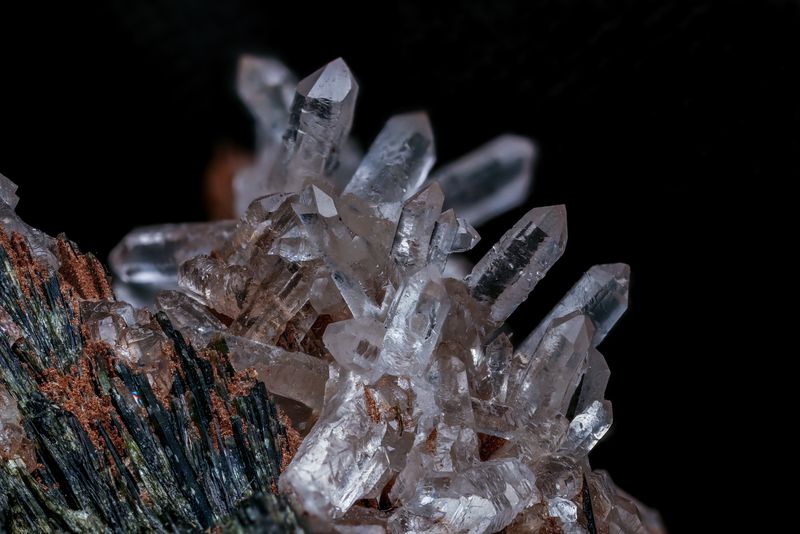
Agatized coral is Florida's official state stone (designated 1979), and it is genuinely beautiful material. It forms when Oligocene-age colonial corals — primarily from the Suwannee Limestone formation — are replaced by chalcedony through a process called silicification. The silica-rich groundwater slowly dissolves the original calcite coral skeleton and replaces it molecule-by-molecule with quartz, preserving the intricate internal structure of the coral in stunning detail. The resulting material is hard (Mohs 7), takes a high polish, and shows the honeycomb septae, growth bands, and colonial architecture of the original coral in translucent gray, white, tan, and occasionally blue or red tones.
The best agatized coral localities are in north-central Florida's river systems, where Oligocene limestone is exposed at or near the surface:
- Suwannee River (Gilchrist and Columbia Counties): River gravels and exposed limestone banks along the Suwannee yield excellent agatized coral, particularly in areas where the river cuts through Oligocene limestone at depth. Best accessed by canoe from public boat ramps.
- Withlacoochee River: The south Withlacoochee in Citrus and Marion Counties has produced high-quality agatized coral nodules from river gravel bars. The material here sometimes shows more complex internal patterning than Suwannee material.
- Tampa Bay area: Beach gravel and natural phosphate-bearing clay deposits around the bay periphery have produced agatized coral as float material washed from eroding Oligocene units offshore.
Agatized coral can be worked with standard lapidary equipment — it's hard enough to take a fine polish but not so intractable as to be difficult to cut. It makes exceptional cabochons. For lapidary guidance, our rockhounding gear guide covers saws, grinders, and polishing compounds appropriate for Florida silicified material.
Coquina & Coral Rocks
Coquina is a sedimentary rock unique to Florida and a few other subtropical coastal locations. It is composed almost entirely of compressed shell fragments — primarily coquina clam (Donax variabilis) shells — cemented by calcium carbonate into a soft, porous limestone. Coquina outcrops on Florida's northeast Atlantic coast, from St. Augustine south to New Smyrna Beach, and it has been quarried for building material since the 1600s. The historic Castillo de San Marcos in St. Augustine — now a National Monument — is built entirely from coquina.
Collectors can examine coquina outcrops at Anastasia State Park near St. Augustine, where natural coquina ledges are exposed on the beach. Collecting rock is not permitted within state parks, but observing and photographing the material is excellent, and loose shell material on the beach is fair game. Coquina is not particularly valuable as a lapidary material, but it's fascinating as a geological curiosity and a reminder of Florida's Pleistocene coastal environments.
Modern coral is legally protected in Florida under both state and federal law — no live coral collecting, and even dead coral on the beach is protected in some jurisdictions. However, the fossil coral that makes up agatized coral (see above) is not subject to these protections when found on appropriate land.
Ocala National Forest & Other Sites
Ocala National Forest, covering about 600 square miles of north-central Florida, sits atop some of Florida's best-exposed Eocene and Oligocene limestone — the Ocala Formation — and offers collecting opportunities that most Florida rockhounds overlook.
The Forest is primarily known among collectors for its chert nodules — flint-like silicified limestone that forms as groundwater silicifies Eocene carbonate. These chert nodules are scattered throughout the forest's sandy uplands as float material, and they occasionally contain silicified fossil material including sponge spicules, echinoderm fragments, and foraminifera. The chert is hard and dense — some pieces take a reasonable polish — and pieces with interesting botryoidal or stalactitic surfaces make unusual display specimens.
More productively, the Ocala Forest's springs and spring runs (Alexander Springs, Juniper Springs, Salt Springs) expose the Eocene Ocala Limestone at the surface, and the spring runs have produced occasional fossil shark teeth, whale bones, and dugong remains eroded from the limestone by spring flow. Collecting within designated swimming areas is generally not permitted, but spring-run areas outside the recreation zones and on National Forest land are generally open to surface fossil collecting for personal use — confirm current regulations with the Ocala National Forest ranger district office before visiting.
The Florida Geological Survey's Open File Reports include detailed geological maps of Ocala National Forest and surrounding areas that are invaluable for planning collecting trips.
Florida Land Access & Collecting Rules
Florida's collecting regulations are a patchwork of state, federal, and private rules that vary significantly by site. Here are the key rules collectors need to know:
Public Beaches — Generally Free
Shark teeth and small fossils collected on public beaches (Venice Beach, Caspersen Beach, etc.) are freely collectible for personal use. No permit is required. The beach is public land from the mean high-tide line to the water; the area above the high-tide line may be private. Commercial collection in significant quantities may require a permit from the Florida Fish and Wildlife Conservation Commission.
Rivers — Collect in the Water, Not on the Banks
Florida's navigable rivers are public waterways. Wading and sifting gravel from the river channel itself is legal for personal fossil collecting. The adjacent banks are frequently private land — stay in the water unless you have landowner permission. Some popular fossil rivers (including sections of the Peace River) have specific access points managed by county or state agencies where bank access is permitted.
State Forests and Wildlife Management Areas
Casual surface fossil collecting (no digging, no mechanized equipment) is generally permitted on Florida State Forests and Wildlife Management Areas for personal use. Permits are required for any organized or systematic collecting. Contact the Florida Forest Service or the Florida Fish and Wildlife Conservation Commission for site-specific rules.
Fossils on State Land — Permit Rules
Under Florida Statute 267, significant fossil vertebrate material on state land may require a permit from the Florida Museum of Natural History's Vertebrate Paleontology Permit Program. Casual collecting (shark teeth, common invertebrate fossils) is generally exempt, but systematically collecting vertebrate material — particularly from known fossil sites — requires a permit. When in doubt, contact FLMNH.
National Forests
Surface collecting of reasonable quantities of rocks, minerals, and common invertebrate fossils for personal use is permitted on National Forest land in Florida without a permit. Significant vertebrate fossil material may require a permit. No mechanized equipment permitted. Commercial collection requires a special use permit.
Best Times to Go Rockhounding in Florida
Florida's climate creates distinct seasonal patterns for rockhounding:
Winter (November – March) — Prime Season
Winter is Florida's best rockhounding season. The rainy season is over, water levels in rivers are at their lowest (maximizing gravel bar exposure on the Peace River and other fossil streams), winter cold fronts produce strong onshore winds and waves that rework beach material and deliver fresh shark teeth to Venice and Caspersen, and the weather is comfortable for outdoor work (70s°F, low humidity). Book Bone Valley fee-dig operations well in advance — they fill up quickly during the busy winter season. This is the time when serious collectors plan their Florida trips.
Spring (April – May) — Good Shoulder Season
Spring sees increasing river levels as the wet season begins, but March through May is still generally productive before summer rains raise water significantly. Beach collecting is still good. Spring is when the Tampa Bay Fossil and Mineral Club and other Florida clubs run their organized collecting field trips — a good way to access private sites and get guidance from experienced local collectors.
Summer (June – September) — Challenging
Summer in Florida is genuinely difficult for most collecting. Afternoon thunderstorms are nearly daily from June through September (the rainy season), river levels are high and gravel bars are submerged, and the heat and humidity make outdoor work uncomfortable. Beach collecting is possible in the mornings before afternoon storms, but the storms also rework beach material, so the day after a storm can be excellent. If you're in Florida in summer, stick to morning beach sessions and finish by noon.
Fall (October – November) — Transition Season
The rainy season winds down in October, river levels begin to drop, and beach conditions improve as the first cold fronts arrive. Early November can be excellent for Peace River collecting as the first significant gravel bars become accessible after summer flooding.
Essential Gear for Florida Fossil Hunting
Florida fossil hunting requires different tools than traditional rockhounding. Here's what works:
🔍 Shark Tooth Sifter / Fossil Screen
A mesh sifter is the essential tool for beach and river fossil hunting. For beach use, look for a scoop-style sifter with ¼-inch mesh on a long handle — you fill it in the swash zone and let the water wash through while you examine the residue. For Peace River, a rectangular Florida-style screen (1/4" or 1/8" hardware cloth on a wooden frame, about 12"×18") is the standard tool. Load it from the river bottom, dip and shake in the current, and examine. Many collectors make their own, or you can find commercial versions from lapidary supply shops.
View Fossil Sifters on Amazon →👟 Water Shoes / Old Sneakers
Both Venice jetty collecting and Peace River wading require footwear that can get wet and handles rough surfaces. Old sneakers work fine. For Peace River, knee-high rubber boots are helpful in cooler weather. Bare feet are not recommended — the river bottom has occasional sharp fossil fragments and oyster shells. Reef-style water shoes are popular with Peace River regulars for their balance of protection and feel.
View Water Shoes on Amazon →📗 Field Guide to Florida Fossils
Florida's Fossils by Robin C. Brown is the standard field reference for Florida collectors — clear photographs, good geological context, and species coverage of everything from Eocene foraminifera to Pleistocene megafauna. Fossil Sharks of the Chesapeake Bay Region by Bretton Kent covers the shark species found at Venice in exhaustive detail. Both are readily available and worth having in your bag. For online reference, the FossilGuy.com shark tooth section is excellent and free.
View Florida Fossil Books on Amazon →Additional Florida Essentials
- Sunscreen + hat: Florida's UV index is extreme. You will burn faster than you expect, especially when you're focused on the water's surface.
- Bug repellent: River collecting in Florida means mosquitoes and no-see-ums, particularly in shaded areas along the Peace River. DEET-based repellent is the only thing that really works on no-see-ums.
- Dry bag or waterproof container: Keep your phone, ID, and finds in a waterproof bag when wading. Peace River crossings can be unexpected, and swamping a canoe is always possible.
- Magnet (rare earth): A strong rare-earth magnet on a string is useful for testing dense black or metallic fragments — phosphatic bone fossils are sometimes magnetic due to iron substitution. Shark teeth are not magnetic.
For a full gear breakdown applicable to all rockhounding styles, see our complete rockhounding gear guide. If you plan to clean and polish your Florida fossil finds at home, our guide to the best rock tumblers covers machines appropriate for shark teeth and agatized coral.
Frequently Asked Questions
Is rockhounding legal in Florida?
Yes, with conditions. Shark teeth and small fossils from public beaches are freely collectible. River collecting is legal in the water channel on navigable rivers. State forests and WMAs permit casual surface collecting. State park collecting is prohibited. Significant vertebrate fossil material on state land may require a Florida Museum of Natural History permit. Always verify current rules with the managing agency for your specific site.
What is the best place to find shark teeth in Florida?
Venice Beach (especially Caspersen Beach) is the top Florida shark tooth site — nicknamed the "Shark Tooth Capital of the World." The jetties at Venice Inlet concentrate fossil-rich gravel where teeth accumulate. The Peace River in DeSoto and Hardee Counties is the top inland site, where wading and sifting gravel bars can produce excellent megalodon and other shark teeth. Low tide, post-storm conditions at Venice give the best beach results; November–April low water gives the best Peace River results.
What is Florida's state stone?
Agatized coral is Florida's state stone, designated in 1979. It is fossilized Oligocene-age colonial coral where the original skeleton has been replaced by chalcedony, preserving the coral's internal structure in hard, polishable form. Found primarily in central Florida river systems including the Suwannee River drainage.
Can I collect fossils from the Peace River in Florida?
Yes. Wading and sifting in the Peace River channel itself is legal for personal fossil collecting. Several outfitters offer guided canoe trips specifically for fossil hunters. Stay in the river — adjacent banks are typically private. Best conditions are November through April when low water exposes gravel bars normally submerged during summer rainy season.
What fossils can you find in Florida?
Florida's fossil record includes shark teeth (Megalodon, Mako, Tiger, Bull, Hemipristis), ray dental plates, horse teeth and bones, tapir remains, mastodon molars, mammoth fragments, glyptodont armor plates, sea cow ribs, whale bones, and a rich marine invertebrate record including Pliocene scallops, corals, urchins, and snails from the Caloosahatchee Formation.
Get weekly guides from RockhoundGuide
Florida fossil tips, site reports, gear picks. No spam. Unsubscribe anytime.